fbpx

North Spitsbergen – Arctic Spring, Hike & Sail

North Spitsbergen – Arctic Spring, Hike & Sail

From USD $4,000

Description

At the end of a long Arctic winter, spring is starting to awaken. The climate, however, still clings to the cold: snow-covered mountains, snow-swept shores, temperatures around –4° C (25°F). It’s a good time to experience the last of winter scenery, and with a little luck, also see some polar bears, walruses, and seals.

Trip Name
North Spitsbergen - Arctic Spring, Hike & Sail
Days
8
Overview
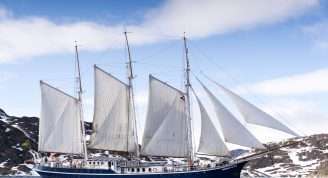
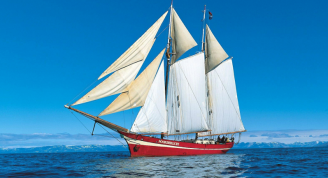
Vessel Type:  Expedition Yacht Length: 49.5 metres Passenger Capacity: 33 Built / refurbished: 1900's / 1994 / 2011 Rembrandt van Rijn is a three-masted schooner with origins as a 1947 herring lugger, later rebuilt for passenger voyages and fully modernised to meet current safety standards. Its compact size, shallow draft, and renewed navigation systems make it well suited to navigating the channels, fjords, and smaller islands of the Arctic. Open deck space supports uninterrupted viewing under sail or engine power, while Zodiacs extend access to remote shorelines. Cabins are simple and functional, all with private facilities, arranged across triple, twin inside, and twin porthole layouts. The ship carries a maximum of 33 passengers with a small, experienced crew and two guides, creating an informal, close-knit environment. Daily landings focus on wildlife, geology, and natural history, with itineraries adjusted to conditions for maximum time ashore. Meals are straightforward and served buffet-style, and the vessel maintains an expedition-first profile without luxury positioning. Rembrandt van Rijn’s advantage lies in scale: the ability to move quietly, land efficiently, and create an intimate sailing-based expedition experience.

Itinerary


Day 1 - Day 1: Largest town, biggest island
You touch down in Longyearbyen, the administrative center of Spitsbergen, the largest island of the Svalbard archipelago. Enjoy strolling around this former mining town, whose parish church and Svalbard Museum make for fascinating attractions. Though the countryside appears stark, more than a hundred species of plant have been recorded in it. In the early evening the ship sails out of Isfjorden, where you might spot the first minke whale of your voyage.In the evening you sail for Trygghamna, where you see the remains of a 17th-century English whaling station and 18th-century Pomor hunting station, both of which you can visit the next morning.
Day 2 - Day 2: Foxes, seabirds, and grazing reindeer
From Trygghamna you walk to Alkhornet, a large seabird cliff where the birds are scouting out breeding places. Below the cliffs is a common place to spot Arctic foxes, and you may also see reindeer grazing on the lush vegetation if there’s not too much snow.
Day 3 - Day 3 – 4: Earth’s northernmost community
You head north for Kongsfjorden and Krossfjorden. The landscape is likely to show signs of winter, the crags and slopes still blanketed with snow.Here there are rich opportunities for snowshoeing – we provide the snowshoes – and visiting places of historic interest: Ny London, where you can see the remains of early 20th-century marble mining, and Ny Ålesund, the northernmost community in the world.There are also research stations and the famous anchor mast of the dirigible Norge, which took the first flight across the North Pole to Nome, Alaska in 1926. Krossfjorden offers views of colossal glaciers and lofty mountain peaks, but ultimately the extent of fjord ice dictates the itinerary here.
Day 4 - Day 5: Walrus watching, seal seeing
Cutting south between the main island of Spitsbergen and Prins Karls Forland, you may encounter walruses at Poolepynten, a common haul-out site.You also have views of St. Johnsfjorden, near Gaffelbreen. The winter ice may not have loosened its grip on the water here, and seals (ringed and bearded) could be numerous in the area.
Day 5 - Day 6 – 7: Wide tundra, tall mountains
You now double back into Isfjorden and venture to Ymerbukta, possibly embarking on a walk in this mountainous area. Here you find an expansive tundra with its own avifauna, depending on when spring arrives, as well as spectacular geological formations along the coast.Further northeast, near Ekmanfjorden, you have the chance for another hike. Common to this area are numerous glaciers that terminate near or in the sea. In Gipsvika you can go on shore near the cliff of Templet, a mountainous location of eroded sedimentary rock from the Upper Carboniferous period – around 290 million years ago.
Day 6 - Day 8: There and back again
Every adventure, no matter how grand, must eventually come to an end. You disembark in Longyearbyen, taking home memories that will accompany you wherever your next adventure lies.
Day 7 - Please note:
At the end of a long Arctic winter, spring is starting to awaken. The climate, however, still clings to the cold: ice-covered mountains, snow-swept shores, temperatures around –4° C (25°F). It’s a good time to experience the last of the winter scenery, and with a little luck, also see some polar bears, walruses, and seals into the bargain. Bird note: It is still somewhat quiet on the cliffs, as this time of year the cliff-nesting birds are only just arriving to pick out their breeding places. By May all the nesting birds will have arrived, and the breeding will take place later in June. All itineraries are for guidance only. Programs may vary depending on local ice, weather, and wildlife conditions. Landings are subject to site availabilities, permissions, and environmental concerns per AECO regulations. Official sailing plans and landing slots are scheduled with AECO prior to the start of the season, but the expedition leader determines the final plan. Flexibility is paramount for expedition cruises, and willingness to compromise on comfort is a basic requirement on board a historic sailing vessel. Important information about the use of sails: The vessel is equipped with sails to be used in good conditions (based on open sea, water depth, wind, and time allowance), but the use of sails is not guaranteed. The captain decides whether to use the sails or the engine. If sails are used, the crew will operate them. Guests must follow the safety instructions of the team. The average cruising speed for s/v Rembrandt van Rijn is 6.5 knots.

Trip Dates

StartEndPrice FromRoom Type
29-05-202605-06-2026USD $4,000Triple Private
29-05-202605-06-2026USD $4,250Twin Private Inside
29-05-202605-06-2026USD $4,950Twin Private Porthole

Inclusions

    • Snowshoeing
    • Explore your way inland from the Polar shorelines with a wide variety of snowshoeing expeditions built for everyone.
    • Hiking
    • Explore the polar coastlines and inlands with a wide variety of invigorating hikes designed for all hikers to enjoy
    • Ny London
    • A former mining settlement in the Svalbard archipelago’s Arctic island of Blomstrandøya
    • Arctic Fox
    • Small but sturdy, these members of the canidae family can withstand some of Earth's coldest temperatures
    • Arctic Tern
    • Among the most nomadic birds on the planet, these sun-loving tourists summer twice a year during their ambitious routes

Map