fbpx

16 Days Luxury Arctic Cruise – Reykjavik to Bayonne

16 Days Luxury Arctic Cruise – Reykjavik to Bayonne

From AUD $34,500

Description

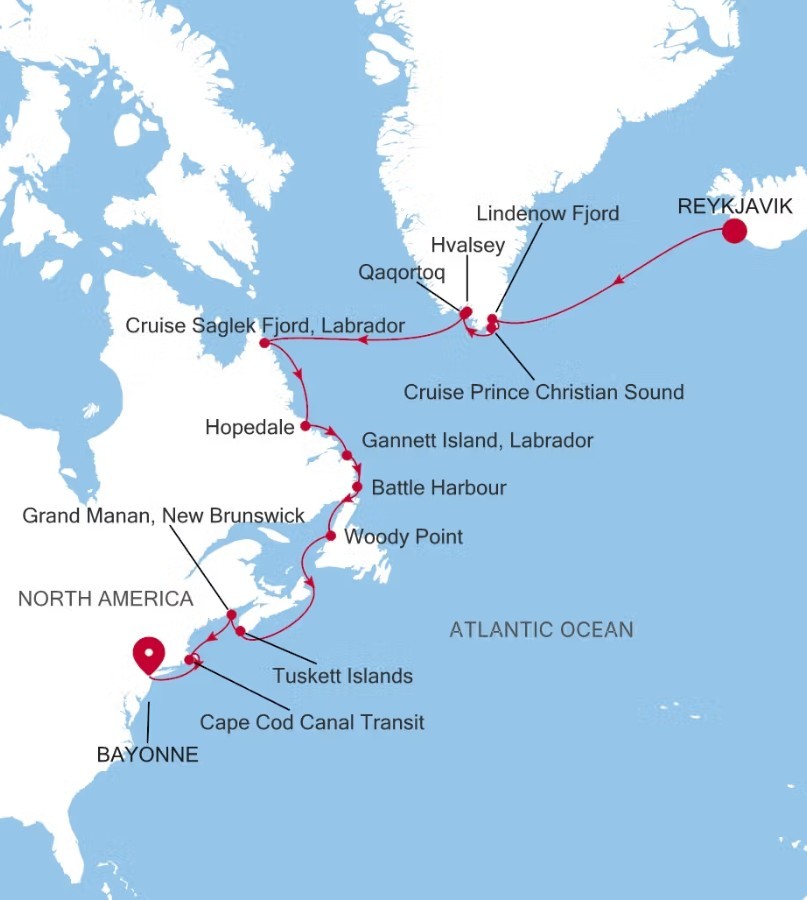
Voyage across the Arctic from Iceland to Greenland’s majestic fjord systems. Explore Prince Christian Sound, Norse ruins, and glacier-capped valleys before crossing the Labrador Sea. Discover Inuit heritage, whale-rich fjords, and remote seabird colonies. Visit UNESCO-listed Gros Morne National Park and Canada’s Atlantic isles, then transit the Cape Cod Canal to complete a transatlantic journey from the remote Arctic to Manhattan’s unmistakable skyline.

Trip Name
16 Days Luxury Arctic Cruise - Reykjavik to Bayonne
Days
16
Overview
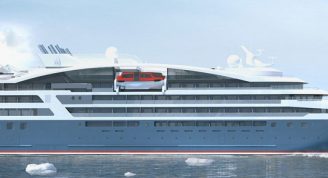
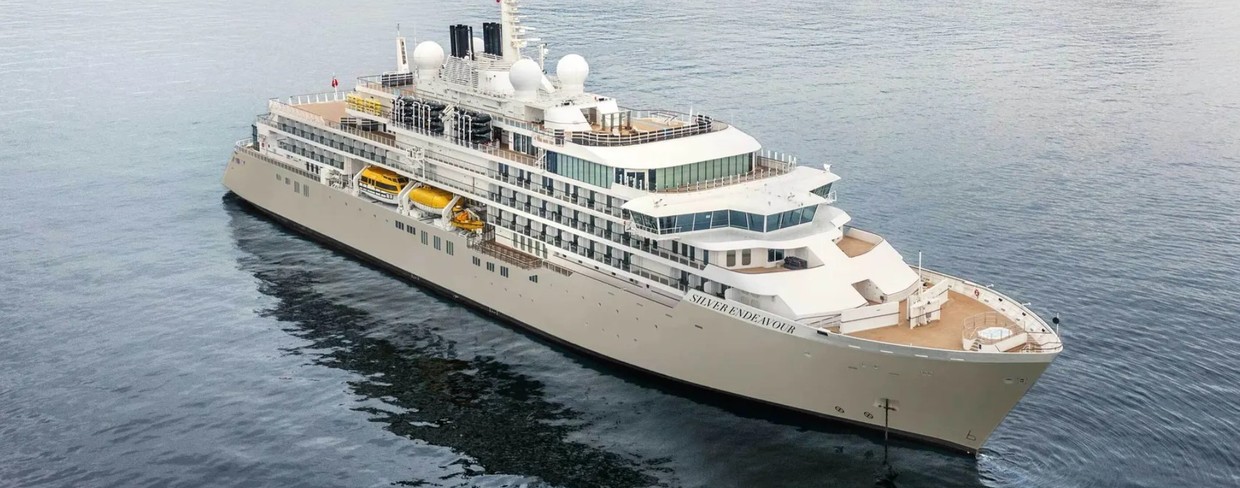
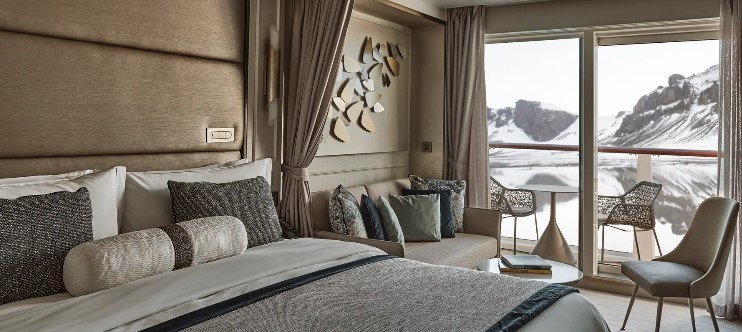
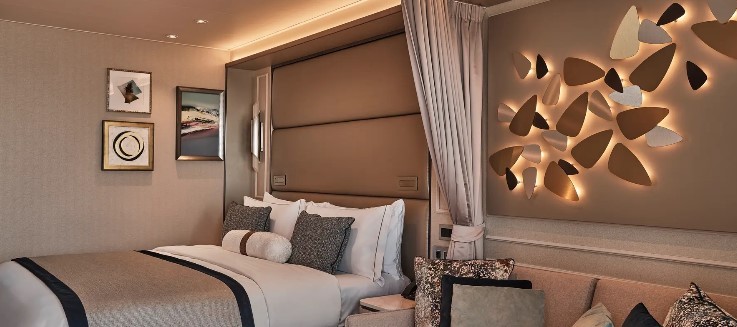
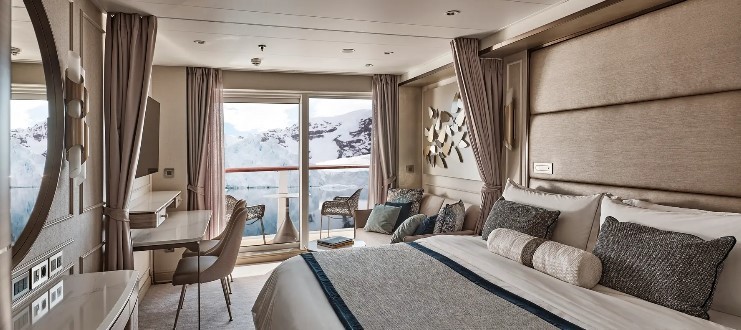
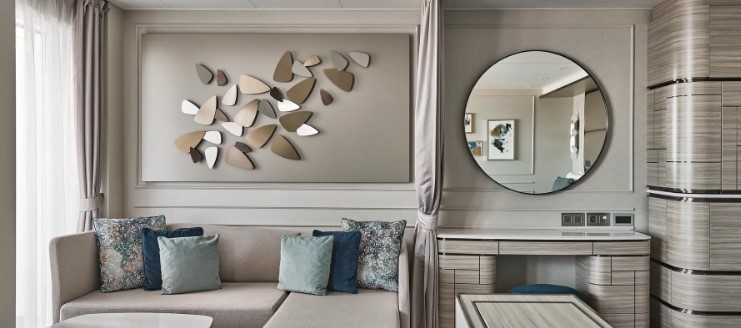
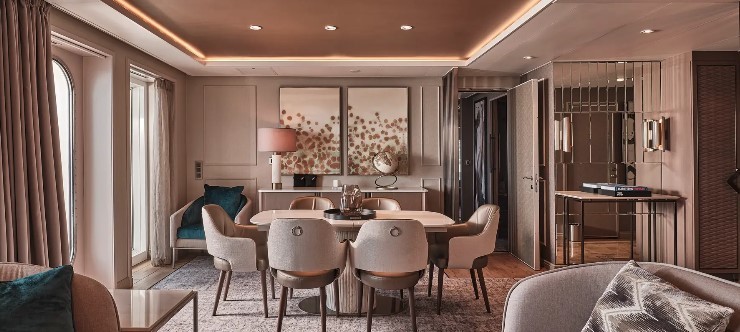
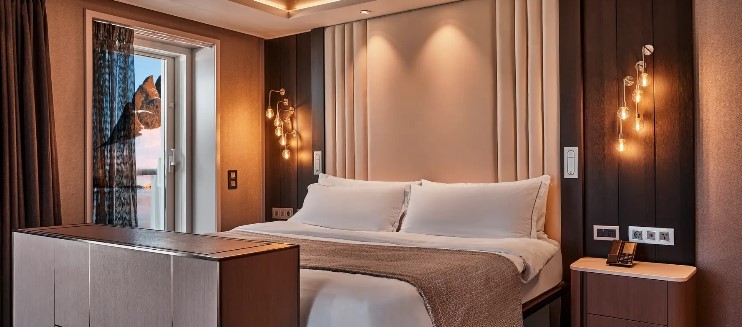
Vessel Type: Luxury Expedition Length: 164.40 metres Passenger Capacity: 200 Built: 2021 Silver Endeavour is redefining the frontier of luxury expedition cruising. Purpose-built for polar exploration and launched in 2021, this state-of-the-art vessel combines cutting-edge technology, sleek design, and Silversea’s hallmark personalised service to deliver one of the most advanced expedition experiences at sea. With a PC6 ice-class hull, a superb 1:1 crew-to-guest ratio, and the highest expert- and Zodiac-to-guest ratios in the industry, Silver Endeavour is your gateway to the most remote corners of the globe — from the Arctic to Antarctica — with absolute comfort and ease. On board, guests enjoy an exceptional array of elegant suites, all with private balconies and expansive views, as well as fine dining across multiple venues, including French gastronomy at La Dame and Italian cuisine at Il Terrazzino. Public spaces such as the Observation Lounge, Explorer Lounge, and glass-enclosed Pool Deck offer stylish havens for relaxation between immersive shore excursions. With her refined interiors, curated library, spa, and mud rooms for expedition prep, Silver Endeavour is the epitome of ultra-luxury travel — built to venture where few have gone before, without compromise.
Itinerary


Day 1 - Day 1 - Reykjavik
The capital of Iceland's land of ice, fire, and natural wonder, Reykjavik is a city like no other - blossoming among some of the world's most vibrant and violent scenery. Home to two-thirds of Iceland's population, Reykjavik is the island's only real city, and a welcoming and walkable place - full of bicycles gliding along boulevards or battling the wind when it rears up. Fresh licks of paint brighten the streets, and an artistic and creative atmosphere embraces studios and galleries - as well as the kitchens where an exciting culinary scene is burgeoning. Plot your adventures in the city's hip bars and cozy cafes, or waste no time in venturing out to Iceland's outdoor adventures. Reykjavik's buildings stand together - below the whip of winter's winds - together with the magnificent Hallgrímskirkja church, with its bell tower rising resolutely over the city. Iceland's largest church's design echoes the lava flows that have shaped this remote land and boasts a clean and elegant interior. The Harpa Concert Hall's sheer glass facade helps it to assimilate into the landscape, mirroring back the city and harbor. Its LED lights shimmer in honor of Iceland's greatest illuminated performance - the northern lights. Walk in the crusts between continents, feel the spray from bursts of geysers, and witness the enduring power of Iceland's massive waterfalls. Whether you want to sizzle away in the earth-heated geothermal pools or hike to your heart's content, you can do it all from Reykjavik - the colorful capital of this astonishing outdoor country.
Day 2 - Day 2 - Day at sea
Days at sea are the perfect opportunity to relax, unwind, and catch up with what you've been meaning to do. So whether that is going to the gym, visiting the spa, whale-watching, catching up on your reading, or simply topping up your tan, these blue sea days are the perfect balance to busy days spent exploring shoreside.
Day 3 - Day 3 - Lindenow Fjord
The relatively unexplored east coast of Greenland has some of the most dramatic fjord scenery in the world, and the stunning Lindenow Fjord is one such example. Situated on the southeast coast and approximately 80 kilometres (50 miles) from the southern tip of the country, the landscape lives up to the Greenlandic name for the fjord, Kangerlussuatsiaq, which means “the rather big fjord”. The fjord is named after Godske Lindenow - who in the 17th century was a Danish navy Admiral tasked with finding the lost Norse settlements in Greenland - and runs some 64 kilometres (40 miles) in from the outer coast. Towering peaks and steep mountainsides line the fjord and appear like ramparts of an impenetrable fortress. The fortress walls do show regular breaches however, with streams of ice cascading down from above, albeit at an imperceptibly slow speed. These small glaciers offer stark contrast to the dark rock, and seem like cold and wintry fingers clinging onto what is otherwise a very pleasant scene. Some are marbled with veins of charcoal coloured rock powder, ground and shattered from the mountains and enveloped by ice, while deeper cracks in the ice luminesce with a cold blue light. As you cruise through the fjord on your ship all sense of reality is erased by wave after wave of sublimity. The dark, still waters are studded with small broken pieces of ice so that looking down as you glide along, it seems as if you are travelling through space, channeled forward to explore the very heart of Greenland.
Day 4 - Day 4 - Cruise Prince Christian Sound
The transit through the Sound is one of this voyage’s highlights. Connecting the Labrador Sea with the Irminger Seat, Prince Christian Sound - or “Prins Christian Sund” in Danish - is named after Prince (later King) Christian VII (1749-1808). 100 km (60 miles), long and at times just 500 meters (1,500 feet) wide, this majestic and spectacular fiord throws you back into a Viking era – flanked by soaring snow-topped mountains, rock-strewn cliffs, and rolling hills, it is as if time has stood still and one easily forgets that this is the 21st century. As you marvel at the sheer size of the mountains that surround you, with the Arctic waters lapping deceptively at the hull, revel in the silence enveloping you. Icebergs float serenely by, carrying with them the ages of time. Be sure to wear warm clothing as this is one spectacle that you do not want to miss.
Day 5 - Day 5 - Qaqortoq (Julianehåb)
The largest town in southern Greenland, Qaqortoq has been inhabited since prehistoric times. Upon arrival in this charming southern Greenland enclave, it's easy to see why. Qaqortoq rises quite steeply over the fjord system around the city, offering breathtaking panoramic vistas of the surrounding mountains, deep, blue sea, Lake Tasersuag, icebergs in the bay, and pastoral backcountry. Although the earliest signs of ancient civilization in Qaqortoq date back 4,300 years, Qaqortoq is known to have been inhabited by Norse and Inuit settlers in the 10th and 12th centuries, and the present-day town was founded in 1774. In the years since, Qaqortoq has evolved into a seaport and trading hub for fish and shrimp processing, tanning, fur production, and ship maintenance and repair.
Day 6 - Day 5 - Hvalsey
18 kilometers northeast of Qaqortoq, Hvalsey is part of Qaqortukulooq, one of the five sites of the UNESCO World Heritage Arctic farming complex Kujataa. Between Eriksfjord to the north and Einarsfjord to the south, the Hvalseyfjord branches off from Einarsfjord. Although Hvalsey is better known for the well-preserved ruins of one of the sixteen churches in the Norse’s Eastern Settlement, the church was in a farmstead known as Thjodhild’s Stead. This farmstead at the northeastern end of the fjord included a large building with living quarters, a hall, and livestock pens, as well as other livestock pens, a storage building, and a warehouse - the ruins of which can still be seen. The Norse farming laid the foundation for the Inuit farming in later centuries, leading to the UNESCO World Heritage status in 2017. In the 14th century account “Descriptions of Greenland” the abundant fish, a reindeer farm on Reindeer Island, and Hvalsey’s name “Whale Island” clearly indicate that the Norse had ample food sources at that time. The church was built in the Anglo-Norwegian style of the 13th century, but is known to have been built over an older graveyard. The farmstead is mentioned in the Icelandic “Book of Settlements” as property of the Kings of Norway, and the last documented event of the Norse in Greenland is a wedding, which took place in the church in September 1408. After almost 600 years of abandonment, conservation work had to be done to prevent the seaward wall from collapsing.
Day 7 - Day 6 - Day at sea
Days at sea are the perfect opportunity to relax, unwind, and catch up with what you've been meaning to do. So whether that is going to the gym, visiting the spa, whale-watching, catching up on your reading, or simply topping up your tan, these blue sea days are the perfect balance to busy days spent exploring shoreside.
Day 8 - Day 7 - Cruise Saglek Fjord, Labrador
a:0:{}
Day 9 - Day 8 - Hopedale
Hopedale, a historic coastal community in Newfoundland and Labrador, lies along the wild and remote shores of Canada's easternmost province. Originally named Agvituk - the Inuktitut word for ‘Place of Whales’ - this small settlement was renamed Hopedale by German missionaries, who arrived here in 1782. The Hopedale Mission, now a National Historic Site of Canada, tells the story of this chapter of the region’s past. Built by the Moravian Church, the complex includes a mission house, storehouse and church - the striking black-and-white buildings, with their typically German sloping roofs, overlook the shore. The architectural remains document the European influence in this land. In 2005, Hopedale was established as the legislative centre of Nunatsiavut. With a subarctic climate, and a sense of remote isolation due to the lack of roads, Hopedale offers a fascinating insight into life amid this beautiful, unforgiving landscape.
Day 10 - Day 9 - Gannett Island, Labrador
a:0:{}
Day 11 - Day 10 - Battle Harbour
a:0:{}
Day 12 - Day 11 - Woody Point, Newfoundland
Acclaimed for its unearthly landscape, Woody Point is probably as close to Mars as you will ever get in this lifetime. Situated on the west coast of the island, the Tablelands behind Woody Point in the Gros Morne National Park are composed of peridotite - like much of the surface of Mars - and NASA, the Canadian Space Agency, plus others are studying this unique landform searching for insights into possible bacterial life on the red planet. The story of the Tablelands earned Gros Morne its World Heritage Site status from UNESCO in 2010, and the area remains a geological wonder, showcasing a time when the continents of Africa and North America collided. When the plates struck 485 million years ago, the peridotite was pushed to the surface, and remained above sea level. The rock lacks the nutrients to sustain plant life, thus giving the Tablelands a barren, isolated appearance. As the name suggests, the flat-topped mountains dwarf the tiny village (population 281!), yet Woody Point has retained its character and the historic houses and buildings dating from 1870 have been beautifully maintained.
Day 13 - Day 12 - Day at sea
Days at sea are the perfect opportunity to relax, unwind, and catch up with what you've been meaning to do. So whether that is going to the gym, visiting the spa, whale-watching, catching up on your reading, or simply topping up your tan, these blue sea days are the perfect balance to busy days spent exploring shoreside.
Day 14 - Day 13 - Tuskett Islands
a:0:{}
Day 15 - Day 14 - Grand Manan, New Brunswick
Grand Manan Island, located in the world famous Bay of Fundy, is the largest of the Fundy islands, but is only is 21 miles long and 11 miles wide at it widest point. Almost all the residents live on the eastern side of the island, since the western side has huge 300 foot cliffs and high winds. Reader’s Digest Magazine voted Grand Manan as one of the World’s 7 Best Small Islands because of its friendly people, scenic beauty and serenity. It is also a recognized world-wide as a North American birding hot spot. Ever since James John Audubon visited in 1833, birders have been coming to find some of the over 240 species of birds that make the island their home. The waters surrounding the island are an important feeding area for a number of whale species, including minke, fins, humpback whales, and the rare North Atlantic right whale.
Day 16 - Day 15 - Cape Cod Canal Transit (Canal Transit, Massachusetts)
This Cape Cod Canal Transit is a rare must for any travel-savvy guest. With two fixed bridges over the canal, clearance is a problem for bigger ships, but Silversea’s small-size ships allow us to glide through as if we were a passenger yacht. For guests lucky enough to be traveling in the daylight, the surrounding scenic spectacle is something truly to behold. If you are traveling during migrating season, be on the lookout for temporary residents such as the Great Blue Heron and the Red-tailed Hawk. As the cape is surrounded by a hybrid of temperate sub-tropical waters and polar ice floes, marine mammal spotters will rejoice as they vie to spot some of the huge variety of wildlife that lives in the canal including the endangered North American Right Whale. For guests traversing the canal at night, we assure you a smooth passage. With a maximum speed of just 8.5 knots authorized by the U.S. Marine authorities, you can be sure you’ll glide by the pretty New England shoreside in plenty of Silversea comfort.
Day 17 - Day 16 - Bayonne, New Jersey
Bayonne serves as a gentle introduction to one of the most action-packed, adrenaline-inducing, and culturally significant areas in the world. Bayonne gives access to New Jersey while also being just minutes away from the heady buzz of New York City. From its coastline, you can take in iconic views of the Statue of Liberty, with the famous Manhattan skyline rising behind her lofted flame. Most who arrive at the cruise terminal will soon be delving into the celebrated and cinematic jungle of New York City to take a big bite out of the Big Apple. The city that never sleeps is within touching distance, welcoming you to a global hub of fine dining, celebrated museums and galleries, and soaring skyscrapers. That’s not to say that Bayonne doesn’t have a little star quality of its own, however. The long arch of the Bayonne Bridge links up with New York City’s Staten Island, and you might recognize its steely span from cinematic cameos in "A Beautiful Mind" and "War of the Worlds" movies. One of Bayonne’s most poignant landmarks is its waterfront 9/11 memorial. This 100-foot-tall monument, with a metallic tear suspended between steel slabs, was donated by Russia. The moving tribute honors those lost in the September 11th attacks and offers a peaceful, reflective space, with views of the One World Trade Center standing tall on the Manhattan skyline.
Day 18 - Please note:
Itineraries are subject to change. 

Trip Dates

StartEndPrice FromRoom Type
07-09-202722-09-2027AUD $34,500Classic Veranda
07-09-202722-09-2027AUD $35,800Superior Veranda
07-09-202722-09-2027AUD $36,900Deluxe Veranda
07-09-202722-09-2027AUD $37,700Premium Veranda
07-09-202722-09-2027AUD $50,600Silver
07-09-202722-09-2027AUD $101,100Grand 1 Bedroom
07-09-202722-09-2027AUD $111,200Owner 1 Bedroom

Inclusions

    • Journey through Japan’s volcanic landscapes and ancient traditions, from Yakushima’s thousand-year-old cedar forests to the samurai heritage of Shimabara and Kanazawa’s exquisite mountain villages.
    • Experience the contrasts of Japan and Korea — from sacred shrines and serene valleys to Busan’s vibrant coastal culture and Buddhist temples.
    • Sail north through Oki Island’s red cliffs and lush scenery, concluding in Otaru’s charming canal district and historic red-brick warehouses.

Map