fbpx

16 Days Luxury Arctic Cruise – Nuuk to Halifax

16 Days Luxury Arctic Cruise – Nuuk to Halifax

$0KUUSS 0 0
Call for Price

Description

Silver Wind is your host for an extraordinary voyage through Greenland and Arctic Canada. From Greenland’s colourful capital and fjords, cross the Davis Strait, scanning for whales, seabirds, and polar bears. Continue on to Baffin Island and remote Arctic outposts. Spend an overnight amid Torngat Mountains National Park’s fjords and Inuit heritage, before exploring Labrador’s history and the pine-scented beauty of the UNESCO Gros Morne National Park and Nova Scotia.

Trip Name
16 Days Luxury Arctic Cruise - Nuuk to Halifax
Days
16
Overview
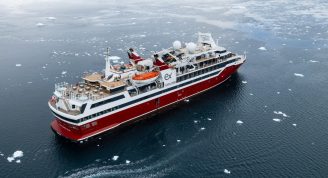
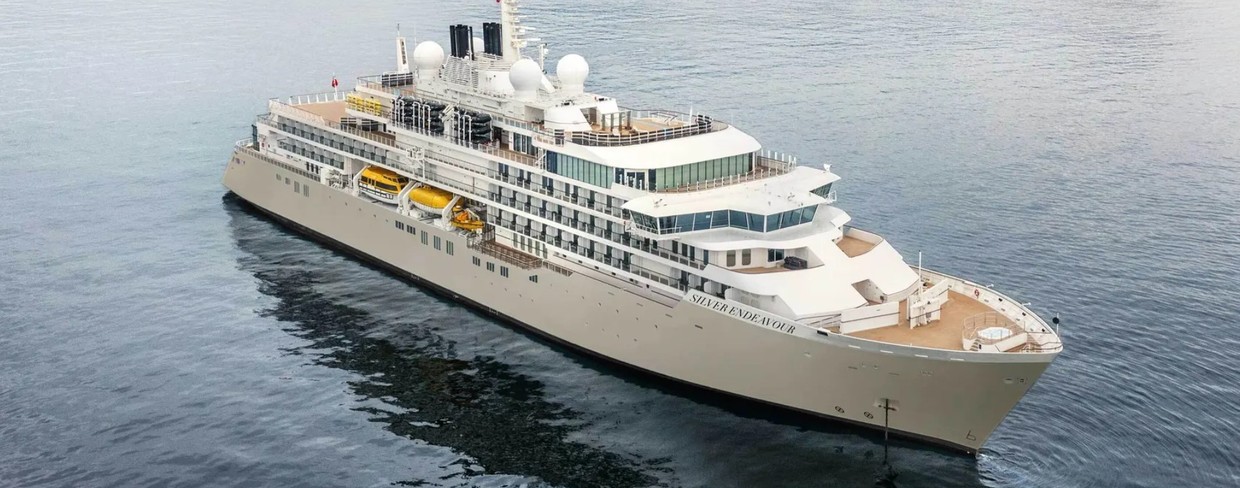
Vessel Type: Small Luxury Cruise Ship Length: 156.7 metres Passenger Capacity: 274 Built: 1995 / Refurbished: 2021 Silver Wind is a refined and versatile expedition cruise ship, combining classic Silversea elegance with cutting-edge expedition capability. Following a major refurbishment in 2018 and a further upgrade in 2021, Silver Wind now boasts a strengthened ice-class hull, making her equally at home in the Polar Regions and sun-drenched tropical ports. With a guest capacity of just 274 and an exceptional crew-to-guest ratio, she offers personalised, attentive service in a luxuriously relaxed setting. Her 24 Zodiac® boats provide a superb platform for immersive exploration, whether spotting wildlife in Antarctica or cruising remote coastlines in comfort. Onboard, guests enjoy a wealth of elegant public spaces and all-suite accommodation, ranging from the spacious Owner’s Suite to the cosy yet stylish Vista Suites. Culinary experiences abound, from authentic Italian cuisine at La Terrazza to open-air dining at The Grill and fine French fare at La Dame. Silver Wind also features multiple lounges, a pool deck, a full-service spa and salon, a fitness centre, and the inviting Observation Library. With its boutique luxury atmosphere, wide-ranging destinations, and upgraded expedition capabilities, Silver Wind offers one of the most adaptable and indulgent cruise experiences at sea.
Itinerary


Day 1 - Days 0 - 1 - Pre Cruise & Nuuk (Godthab)
Pre Cruise BenefitsHotelCharter flightsIn the bustling capital city of Greenland, you could be forgiven for forgetting you are in such a vast and isolated country. Nuuk is Greenland's economic and social hub, home to more than a third of Greenland's population, and although it feels like a world capital, scratch the surface, and a uniquely Greenlandic character can be found underneath. Nuuk Cathedral overlooks the gorgeous old Colonial Harbour district and the Greenland National Museum, resting place of the legendary Qilakitsoq mummies, the true highlight of the museum's archaeological collection. Above the Colonial Harbour sits downtown Nuuk, with lines of Scandistyle apartments, a bustling shopping district, the Greenlandic Parliament, Nuuk City Hall (which welcomes visitors to see its artwork), and even outdoor cafes selling locally produced food and beer. These nods to modernity compete for space with local artisan boutiques, the meat market selling the catch from Nuuk's vast fjord-lands, and the stunning Katuaq Cultural Centre, where blockbuster movies, as well as local and foreign performers, entertain the people of Nuuk. Although Nuuk has long been a melting pot of Danish and Greenlandic ideas, this is a city where Greenland displays its sophistication, with the Country's only traffic lights, roundabouts, and University. Most of all, expect to find a multitude of friendly people who are proud of who they are, and equally proud of the city they call home.
Day 2 - Day 2 - Evighedsfjord
Evighedsfjord (Eternity Fjord) is a large fjord northeast of Kangaamiut in southwest Greenland. The fjord has a length of 75 kilometers and several branches with numerous glaciers coming down from the Maniitsoq Ice Cap to the north can be seen. The Evighedsfjord has several bends and whenever the ship reaches the supposed end the fjord continues in another direction and seems to go on forever. Qingua Kujatdleq Glacier is at its southeastern end. At the northwestern end, a U-shaped valley has seven glaciers coming down from the mountains but not reaching the water. The glaciers had their maximum extent around the year 1870 and have gone through several cycles of advance and retreat. The mountains on either side of the fjord can reach in excess of 2,000 meters and the fjord has a depth of up to 700 meters. Evighedsfjord’s snowline is at 1,100 meters and the Evighedsfjord region is famous as one of Greenland’s best heli-skiing areas.
Day 3 - Day 3 - Sisimiut
Sisimiut ("The People of the Fox Holes") is Greenland's second city, the largest Arctic City in North America, and a hub between the warmer South and the frozen North of the country. With a young, dynamic population, including students from all over the country, Sisimiut is one of the fastest-growing cities in Greenland. Inhabited for more than four and a half thousand years, the Danish Colonial Era saw the rapid development of the city into a trade center, and the old buildings and artifacts can be seen at Sisimiut Museum, a collection of beautifully restored buildings displaying everything from ancient turf houses to modern Inuit art. The local artisans are considered some of the best in Greenland and often sell their wares direct from their communal workshop in the harbor, where they barter with hunters for raw materials. Today, modern industry focuses on processing seafood and shipping; KNI, the state-run chain of general stores operating in even the most remote settlements is based in Sisimiut. Most residents still live in the colorful wooden houses Greenland is so well known for. Sisimiut's vast backcountry offers excellent opportunities for hiking and fishing, and the locals often use sled dogs or snowmobiles to get around their vast mountainous playground during the long winters. In the summer, one can walk as far as Kangerlussuaq International Airport, a trail also used for the grueling Polar Circle Marathon, one of the toughest endurance events in the world.
Day 4 - Day 4 - Day at sea
Days at sea are the perfect opportunity to relax, unwind, and catch up with what you've been meaning to do. So whether that is going to the gym, visiting the spa, whale-watching, catching up on your reading, or simply topping up your tan, these blue sea days are the perfect balance to busy days spent exploring shoreside.
Day 5 - Day 5 - Iqaluit (Nunavut)
Iqaluit is the capital of Canada’s newest territory, Nunavut, which is Inuktitut for “our land”. The community is located at the head of Frobisher Bay, an inlet of the North Atlantic extending into southeastern Baffin Island. The Bay is so long that it was first taken to be the possible entrance of a Northwest Passage. In Iqaluit, the Nunatta Sunakkutaangit Museum and the Nunavut Legislative Assembly Building both house incredible collections of Inuit artwork with interesting local prints for sale in the museum shop.
Day 6 - Day 6 - Lady Franklin Island
Named in honor of Sir John Franklin’s widow, the lonely and uninhabited Lady Franklin Island lies off of Baffin Island’s Hall Peninsula at the entrance to Cumberland Sound. The island is named for the wife of Sir John Franklin, the Arctic explorer who died trying to discover the Northwest Passage. The geology of the island is striking with vertical cliffs of Archean rocks, likely to be some of the oldest stone in Canada. The waters around Lady Franklin Island offer an abundance seabirds, ducks, seals, and walrus. With a bit of luck, it is possible to see Atlantic Puffins here and perhaps even a rare Sabine’s Gull.
Day 7 - Day 6 - Monumental Island
Monumental Island is a splinter of ancient metamorphic rock, hunching in the frigid waters of the Davis Strait, defying the ocean and ice around it. Named to honor the legendary Polar Explorer Sir John Franklin, the island displays at times displays everything Nunavut has to offer, in an ocean studded with vast icebergs drifting across from Greenland. Monumental Island is a well-known den site for polar bears, the icon of the Arctic; there is a good chance to see mother bears with cubs on the island, as the bears become trapped by the lack of summer ice, using the island as a base to hunt until the ice returns in the Autumn. Seeing the white silhouette of a polar bear against the ancient black rock and autumn tundra colors is an experience that will remain long after returning on board. Groups of harp seals are a common sight in the waters around Monumental Island and can be very curious, often swimming very close to investigate new objects such as boats. There are several sites on the island also used as haul-out sites for the charismatic Atlantic Walrus. These vast animals are surprisingly gentle and skittish, and can often be observed caring for their calves on the rock bluffs while keeping a careful watch for polar bears. Almost nowhere else in Nunavut can the charismatic wildlife of the Arctic be observed in such a stunning setting.
Day 8 - Day 7 - Lower Savage Islands
The Lower Savage Islands are a small group of islands off of the southeastern tip of Baffin Island, and a common location for polar bears to be found during the summer months. With plenty of land to roam while giving each other a wide berth, plus opportunities to feed, it seems perhaps bears can be found here as the ice vanishes with the summer season’s warming temperatures.
Day 9 - Days 8 - 9 - Torngat Mountains National Park
Lying in the heart of the Amazon, hundreds of miles upriver from the Atlantic, Manaus is a busy port city surrounded by the richest rainforest habitat on Earth. Placed strategically at the confluence of two rivers, the town was founded as a fortress by the Portuguese Navy, but quickly became a trade hub for the surrounding area. By the late 19th Century, Manaus was the centre of Brazil's booming rubber industry, and grew rapidly into one of the largest cities in Brazil. During this period, many of Manaus' grandest buildings were constructed by the city's 'Rubber Barons', including the Public Market, and the Amazon Theatre, a vast decadent opera house. Today, Manaus is a cultural melting pot, with a diverse population. A complex system of free trade rules has turned Manaus into one of the wealthiest cities in the Brazil, with heavy industry developing alongside traditional livelihoods such as river fishing, and gathering the bounty of fruit, nuts and medicinal plants which the rainforest bestows. However, it is the surroundings which give Manaus its unique character. The famous Meeting of Waters, where tannin-rich water from the Rio Negro combines with milky water from the Rio Solimões to form the Amazon, can be seen just outside town, and the jungle beckons visitors to explore and discover. Excluding Manaus, the state of Amazonas is extremely sparsely populated, and in the largest rainforest on Earth, it is easy to forget the hustle and bustle of the city and simply enjoy the wonders of nature.
Day 10 - Day 10 - Hopedale
Hopedale, a historic coastal community in Newfoundland and Labrador, lies along the wild and remote shores of Canada's easternmost province. Originally named Agvituk - the Inuktitut word for ‘Place of Whales’ - this small settlement was renamed Hopedale by German missionaries, who arrived here in 1782. The Hopedale Mission, now a National Historic Site of Canada, tells the story of this chapter of the region’s past. Built by the Moravian Church, the complex includes a mission house, storehouse and church - the striking black-and-white buildings, with their typically German sloping roofs, overlook the shore. The architectural remains document the European influence in this land. In 2005, Hopedale was established as the legislative centre of Nunatsiavut. With a subarctic climate, and a sense of remote isolation due to the lack of roads, Hopedale offers a fascinating insight into life amid this beautiful, unforgiving landscape.
Day 11 - Day 11 - Gannett Island, Labrador
a:0:{}
Day 12 - Day 12 - Battle Harbour
a:0:{}
Day 13 - Day 13 - Woody Point, Newfoundland
Acclaimed for its unearthly landscape, Woody Point is probably as close to Mars as you will ever get in this lifetime. Situated on the west coast of the island, the Tablelands behind Woody Point in the Gros Morne National Park are composed of peridotite - like much of the surface of Mars - and NASA, the Canadian Space Agency, plus others are studying this unique landform searching for insights into possible bacterial life on the red planet. The story of the Tablelands earned Gros Morne its World Heritage Site status from UNESCO in 2010, and the area remains a geological wonder, showcasing a time when the continents of Africa and North America collided. When the plates struck 485 million years ago, the peridotite was pushed to the surface, and remained above sea level. The rock lacks the nutrients to sustain plant life, thus giving the Tablelands a barren, isolated appearance. As the name suggests, the flat-topped mountains dwarf the tiny village (population 281!), yet Woody Point has retained its character and the historic houses and buildings dating from 1870 have been beautifully maintained.
Day 14 - Day 14 - Day at sea
Days at sea are the perfect opportunity to relax, unwind, and catch up with what you've been meaning to do. So whether that is going to the gym, visiting the spa, whale-watching, catching up on your reading, or simply topping up your tan, these blue sea days are the perfect balance to busy days spent exploring shoreside.
Day 15 - Day 15 - Halifax, Nova Scotia
A city that thrives on a diet of music, outdoor events, and ocean-faring history, Nova Scotia's capital - and Atlantic Canada's largest conurbation - oozes salt-licked charm. The star-shaped fortress of Halifax Citadel sits above the city, while down below, Halifax revolves around its bustling harbor. Here, jet skis skid across the water, and heritage ships jaunt out to scenic offshore islands. Music carries on the waterfront's breeze as summer's events play out, while a hefty population of pubs and restaurants provides all the space required for sitting back and relaxing. The shorefront boardwalk invites you on a gentle stroll along the waves, wandering back through Halifax's history. The Canadian Museum of Immigration waits at Pier 21 and is the doorway to a country of opportunity for so many - with over a million immigrants taking their first footsteps into Canada here. The pier's wooden boards are dotted with cafes, craft shops, and artist studios. Sail deeper into seafaring heritage at the maritime museum. As the closest city to the sinking of the Titanic, recovered victims were transported to - and many were buried - in Halifax. The story, and items from the doomed vessel, are displayed in the museum's collection. Peggy's Cove lighthouse is nearby, and this immaculate little lighthouse is one of Canada's favorites, watching out stoically over the Atlantic's waves. With rich pickings available from its coastal location, the fruits of the sea are served up in the fryers of Halifax's varied restaurants - try seared scallops and juicy mussels. Round off any meal with a buttery blueberry grunt dessert - delicious when served up warm with a dollop of melting vanilla ice cream.
Day 16 - Please note:
Itineraries are subject to change. 
Day 17 - Day 17 Ulukhaktok, Northern Territories
a:0:{}
Day 18 - Day 18 Smoking Hills (Northwest Territories)
The Northwest Territories’ Smoking Hills show a natural phenomenon which has probably been active for thousands of years. The hills close to the Beaufort Sea were seen by John Franklin in 1826 during his second Canadian expedition looking for indications of a Northwest Passage. Franklin observed that the rocks and soil around Cape Bathurst seemed to be on fire and produced acrid white smoke. They were therefor named “Smoking Hills”. The reason behind this phenomenon is neither human-induced burning nor volcanic activity, but the subsurface exothermic reaction between the bituminous shale, the sulfur and the iron pyrite of the area. The heat being released through the oxidation of pyrites in the Cretaceous mudstones along the sea cliffs leads not only to high ground temperatures, but also to hot sulfurous gas being driven off and the possibility of spontaneous combustion. The fumes that are seen contain sulfur dioxide and sulfuric acid and are noxious.
Day 19 - Day 19 Cruise Beaufort Sea
Take advantage of the brief summer thaw and enjoy the spectacular peculiarities of the Beaufort Sea. Frozen for most of the year, the Beaufort Sea is only navigationally possible during the short summer months of August and September when a channel near the Canadian and Alaskan shore opens up. Despite the sea being frozen for a sixth of the year, it is home to a myriad of wildlife, so lucky Northwest Passage travellers will be richly rewarded. Be on deck with binoculars and cameras at the ready for sightings of fish like Arctic char, birds like the king eider, marine mammals like beluga and bowhead whales, and, if you’re lucky, predators like the polar bear. However, circumstances in the rapidly changing Arctic might soon change the species habitations and have many scientists and ecologists are worried that the future of the wildlife of the Beaufort Sea hangs in the balance. Dispute has arisen regarding how long the shores have been populated by humans. Some say that the Beaufort Sea supported human life as long as 30,000 years ago, while others disagree, saying that the livelihoods and cultures of the Inupiat, Inuvialuit and Gwich’in peoples who live on the shores is much more recent. In any case, recorded discovery is less than 200 years old. The sea is named after Sir Francis Beaufort, the British 18th century naval officer whose observation of the wind and sea state resulted in the Beaufort scale.
Day 20 - Day 20 Herschel Island (Yukon Territory)
Three kilometers off Yukon’s north coast, only Workboat Passage separates Herschel Island-Qikiqtaruk from Ivvavik National Park. The low-lying treeless island of 116 square kilometers was Yukon’s first territorial park. Herschel Island-Qikiqtaruk has been declared a National Historic Site of Canada in 1972, classified as a Nature Preserve in 1987, designated a Natural Environment Park in 2002 and as an example of the technologies and techniques used for living and construction over the past several millennia it is now on the tentative UNESCO WHS list! The island is also an important area for Ice Age fossils. Normally snow-covered from September to June, the island shows abundant and diverse wildlife, with many migratory birds, including the largest colony of Black Guillemots in the Western Arctic, caribou, muskox, polar bear, and brown bear on land and bowhead and beluga whales, ringed and bearded seals, and occasionally walrus in its surrounding waters. Seasonal hunting possibilities from spring to fall have led the Inuvialuit using the area for hundreds of years. When Franklin arrived in 1826 he saw three of their camps. Remains of their old dwellings are still visible near Simpson Point. This is where in the late 1800s, American whalers established a now abandoned station. At the height of the Beaufort Sea whale hunting period there were 1,500 residents. Several of the historic buildings by whalers, and later missionaries, traders and the RCMP are still standing –although some had to be moved further inland to escape the rising sea level.
Day 21 - Days 21 - 22 Day at sea
Days at sea are the perfect opportunity to relax, unwind and catch up with what you’ve been meaning to do. So whether that is going to the gym, visiting the spa, whale watching, catching up on your reading or simply topping up your tan, these blue sea days are the perfect balance to busy days spent exploring shore side.
Day 22 - Day 23 Point Hope, Alaska
Whales dominate life at Point Hope (Tikiġaq) settlement in the extreme Northwest of Alaska. Tikiġaq, the Inuit name of the settlement, means finger. It describes the shape of the point jutting out into the sea upon which the settlement sits. It is a good location for hunting as Bowhead Whales and other marine mammals swim close to the shore as they round the point on migrations. The Inuit people of Point Hope still rely on hunting for much of their food. Techniques have changed a little, but the targets and community involvement are the same. Seals, Walrus, Belugas and birds are taken. A few of Bowhead Whales are killed each year under a subsistence hunting permit. People from Tikiġaq hunt with two sealskin boats, each with a dozen crew under a respected captain. Whales are harpooned, dragged onto the ice, and cut up. Whale meat and blubber is divided amongst the community, with most stored frozen in the permafrost for winter meals. Inuit culture lives on, specially through the whales. The biggest festival occurs at the end of the whaling season. Whales appear in many of their artifacts. Look for the biggest whale feature of Point Hope—the dramatic picket fence of large whale bones surrounding the cemetery. It is a historic site, as are two archaeological digs (now finished). One excavated sunken Inuit houses. The other site revealed the earlier Ipiutak culture present from 500 BCE to 100 CE. Tikiġaq is the oldest documented continuously inhabited settlement in North America at 2,500 years.
Day 23 - Day 24 Port Clarence, Alaska
Being the most advanced port to northwest North America, Port Clarence has always been a strategic and important port. For a long time during the 19th century, this Alaskan land served as a gathering refuge and spot for mariners, particularly a rendezvous site for traders from both sides of the Bering Strait. Among them, Russian fur traders and commercial whalers. These days, Port Clarence is mostly used for Artic research and marine safety.
Day 24 - Day 25 Nome, Alaska
Nome is located on the edge of the Bering Sea, on the southwest side of the Seward Peninsula. Unlike other towns which are named for explorers, heroes or politicians, Nome was named as a result of a 50 year-old spelling error. In the 1850's an officer on a British ship off the coast of Alaska noted on a manuscript map that a nearby prominent point was not identified. He wrote "? Name" next to the point. When the map was recopied, another draftsman thought that the “?” was a C and that the “a” in "Name" was an o, and thus a map-maker in the British Admiralty christened "Cape Nome." The area has an amazing history dating back 10,000 years of Inupiaq Eskimo use for subsistence living. Modern history started in 1898 when "Three Lucky Swedes”, Jafet Lindberg, Erik Lindblom and John Brynteson, discovered gold in Anvil Creek…the rush was on! In 1899 the population of Nome swelled from a handful to 28,000. Today the population is just over 3,500. Much of Nome's gold rush architecture remains.
Day 25 - Day 26 Post Cruise
a:0:{}
Day 26 - Please note:
Itineraries are subject to change.

Trip Dates

StartEndPrice FromRoom Type
16-09-202701-10-2027Array Array26,800Vista
16-09-202701-10-2027Array Array46,600Medallion
16-09-202701-10-2027Array Array0Veranda
16-09-202701-10-2027Array Array48,200Silver
16-09-202701-10-2027Array Array52,900Royal 1 Bedroom
16-09-202701-10-2027Array Array59,100Grand 1 Bedroom
16-09-202701-10-2027Array Array65,500Owner 1 Bedroom
16-09-202701-10-2027Array Array82,200Royal 2 Bedroom
16-09-202701-10-2027Array Array88,400Grand 2 Bedroom
16-09-202701-10-2027Array Array89,600Owner 2 Bedroom
16-09-202701-10-2027Array Array0Midship Veranda

Inclusions

    • Experience Greenland’s dramatic fjords and colourful settlements before crossing the Davis Strait in search of whales, seabirds, and polar bears.
    • Explore the rugged wilderness of Baffin Island and the Inuit heritage of Torngat Mountains National Park, with an overnight stay amid its towering fjords.
    • Discover Eastern Canada’s charm — from historic Labrador outports to Gros Morne’s UNESCO-protected scenery and Halifax’s lively maritime spirit.

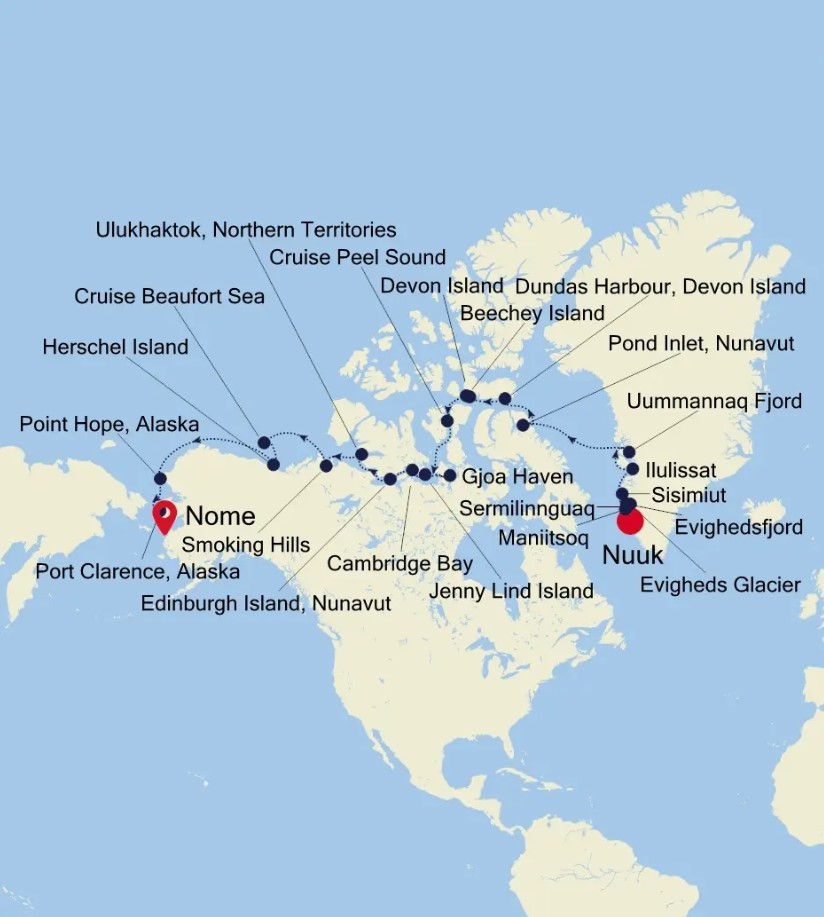
Map