fbpx

5 Day Galapagos Cruise B aboard Catamaran Eco Galaxy

5 Day Galapagos Cruise B aboard Catamaran Eco Galaxy

5GGAL
Call for Price

Description

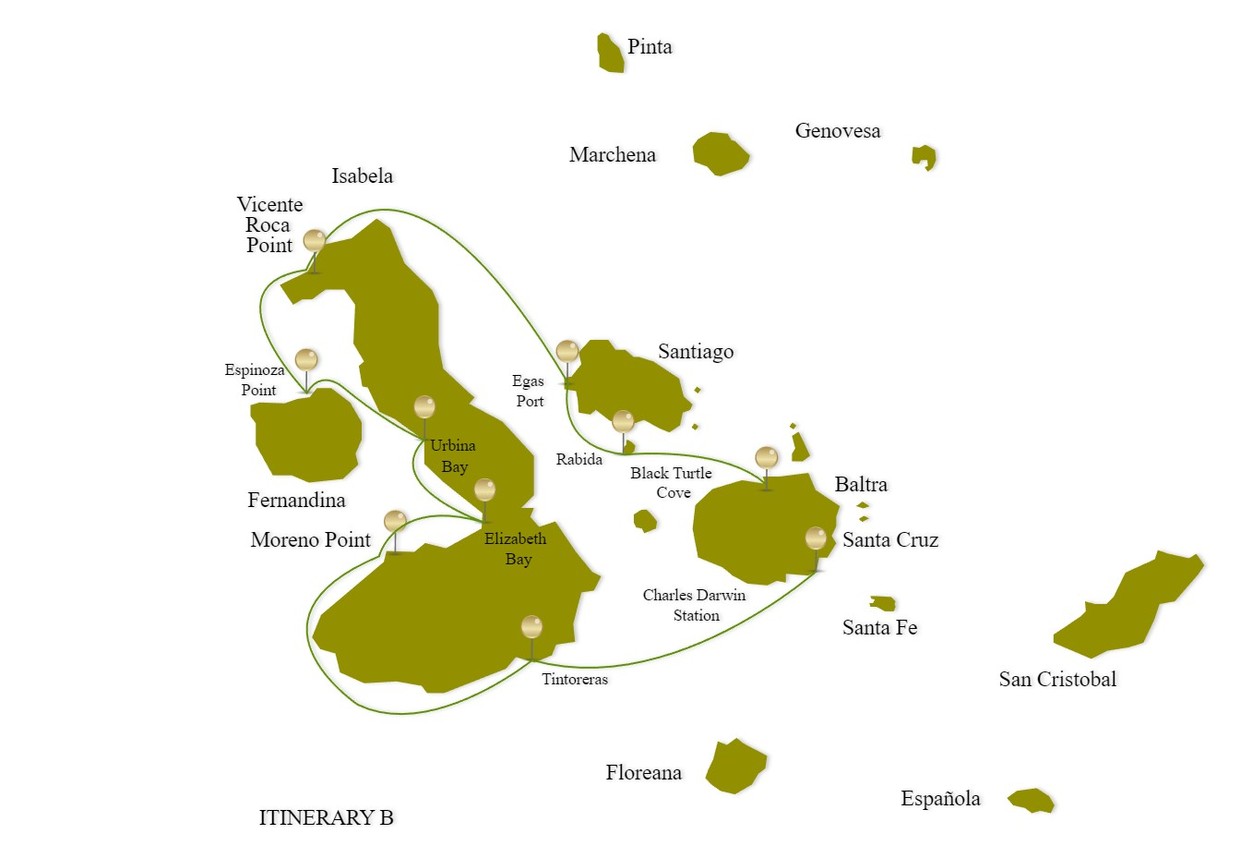
This 6-day Galápagos Islands cruise, starting and ending at Baltra Airport on Santa Cruz Island, offers an in-depth exploration of the archipelago’s western and central islands, including Santa Cruz, Isabela, Fernandina, and Santiago. The itinerary features a mix of snorkeling, hiking, and wildlife observation, showcasing the region’s unique biodiversity and volcanic landscapes. Highlights include encountering giant tortoises in the Santa Cruz Highlands, observing marine iguanas on Fernandina, and exploring Isabela’s diverse coastal ecosystems. Guided excursions, such as visits to lava fields, mangrove bays, and historic sites like Tagus Cove, provide insights into the Galápagos’ geological wonders and conservation efforts, delivering a rich and immersive experience.
Trip Name
5 Day Galapagos Cruise B aboard Catamaran Eco Galaxy
Days
6
Overview
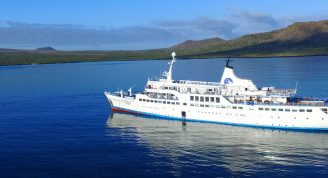
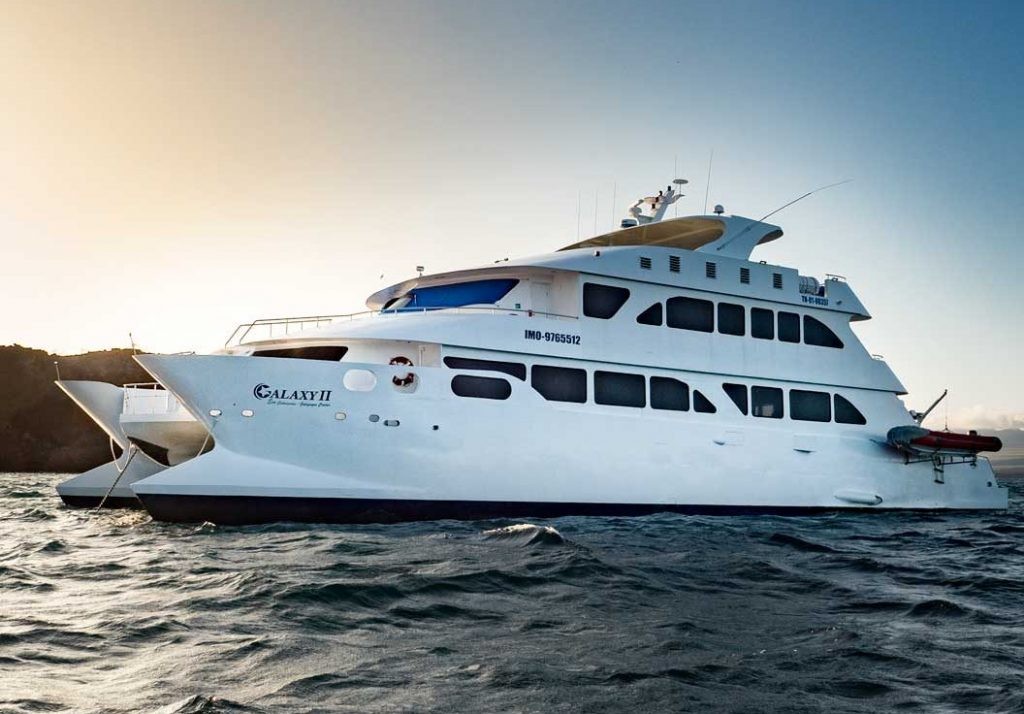
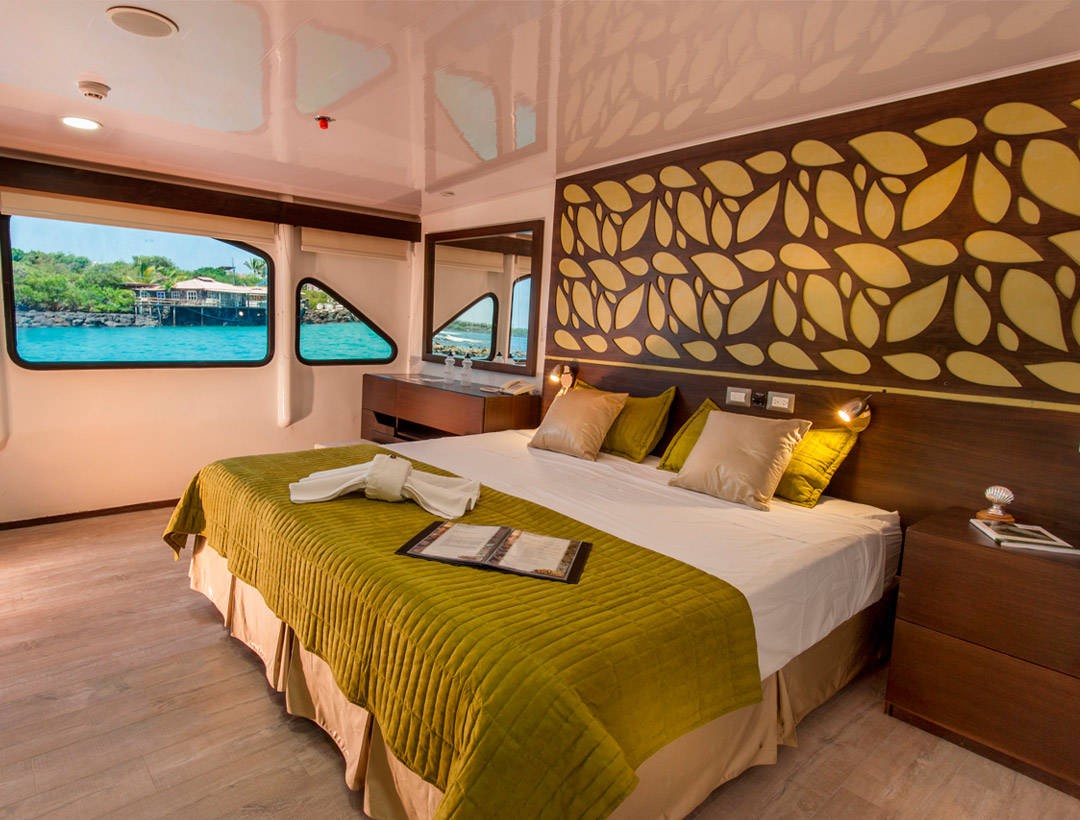
Vessel Type: Catamaran Length: 31 metres Passenger Capacity: 16 Built: 2014 EcoGalaxy operates as a first-class catamaran built with a low-impact profile to minimise disturbance to the Galápagos environment. The ship carries sixteen guests in eight cabins and maintains a compact, efficient layout that keeps all movement simple and intuitive. Social areas include a rear lounge with media and reading facilities, a dining room, bar, solarium, and an al fresco deck that opens directly to the surrounding landscape. Cabins are arranged in matrimonial, twin, and one triple configuration, all designed for basic comfort rather than excess decoration. The atmosphere is quiet, contained, and geared toward travellers who want steady access to the scenery without distraction. Operations emphasise predictable, well-structured activity days supported by a bilingual guide and a small crew. Snorkelling equipment is included, with supervision for guests who need it. Kayaks, panga rides, and guided walks provide the rest of the field programme. The culinary approach is built around Ecuadorian dishes shaped by island-sourced ingredients, with enough flexibility to accommodate dietary variations without complication. The ship functions as a stable, first-class platform with restrained amenities and a clear purpose: steady movement, reliable comfort, and low-impact exploration.

Itinerary


Day 1 - Day 1 AM: SANTA CRUZ - BALTRA AIRPORT ARRIVAL & PM: HIGHLANDS
Welcome to Galapagos! Upon arrival at Baltra Airport, your naturalist guide will greet you and assist with the transfer to Itabaca Channel. This initial journey offers your first connection with the archipelago as you take a short ferry ride to Santa Cruz Island. Along the way, observe Baltra’s arid landscape and learn about its history as a former U.S. WWII airbase. This is just the beginning of the many fascinating stories awaiting you on your adventure.Either if you do this visit starting from Baltra or from Puerto Ayora, a bus will take you to the highlands stopping along the way at one of the reserves to visit the lush highland forests where you will look for Galapagos Giant tortoises in their natural environment. This is the best place in the Galapagos to see these gentle giants (reaching over 300 kg / 600 pounds!) casually grazing and resting in freshwater ponds. This is also home for a great diversity of birds rarely found at the lowlands, including finches (tree, woodpecker and vegetarian finches), flycatchers and several species of water birds. You will visit a lava tunnel (depending on the itinerary) and learn how these extraordinary formations were created by ancient volcanic eruptions.
Day 2 - Day 2 AM: MORENO POINT & PM: ELIZABETH BAY
Moreno Point is a magical place with extensive lava fields which look lifeless at first sight. Once inland, scattered brackish lagoons form an oasis of life where you can find flamingos, gallinules, ducks and herons. Along the shore we will look for penguins, marine iguanas, flightless cormorants, blue-footed boobies, sea lions, oystercatchers and other shore birds.Elizabeth Bay is a beautiful sheltered bay surrounded by large mangroves and barren lava fields. There is no trail here so you will take a dinghy tour to explore many channels, pools and coves teeming with life. This is one of the best locations in the islands to see Galapagos penguins, but don’t expect to see thousands of them, as the entire population of the islands is only about 3.000 of them. Flightless cormorants also nest in the area and blue-footed boobies and pelicans often fish in these shallow and rich waters. Rays and sea turtles are also very abundant.
Day 3 - Day 3 AM: URBINA BAY & PM: TAGUS COVE
This place is known for the dramatic uplifting that happened here during the 1950’s. A large portion of the coast was pushed up, exposing many hectares of previously submerged land. Look carefully along the trail and you will find small shells and corals, a proof that the area was underwater more than sixty years ago. The trail will give the opportunity to see land iguanas and, during certain seasons, giant tortoises. Galapagos hawks nest in the area and are often seen flying or perched on the trees.Tagus Cove is steeped in history, once visited by Charles Darwin during his Galapagos exploration. A scenic trail winds through dry Palo Santo forests, where Darwin’s finches and mockingbirds can be spotted. At the top, breathtaking views of Lake Darwin and Isabela’s towering volcanoes await. A boat tour along the shore provides a chance to observe Galapagos penguins, flightless cormorants, marine iguanas, and the elusive Galapagos martin, one of the rarest and most endangered birds in the archipelago.
Day 4 - Day 4 AM: ESPINOZA POINT & PM: ALBERMARLE POINT
Located at the base of an imposing volcano (the most active in the Galapagos islands) this site is one of the jewels of the Galapagos National Park. As soon as you disembark you will be surrounded by hundreds of marine iguanas, as this is the largest colony for the species. Sea lions bask in the beaches while their pups play in tide pools. Along the shore you will see flightless cormorants, which are restricted to the western areas of the archipelago. Surrounded by cold plankton-rich waters, Punta Espinosa is home for an array of species, including herons, pelicans, oystercatchers, sea turtles, shorebird and many more. Look up in the mangroves as Galapagos hawks often perch to look for their prey.In the afternoon, visit Albemarle Point, where military history meets Galapagos wildlife. During WWII, the U.S. built a radar base here to monitor potential Japanese threats, and remnants of this structure remain visible today. Despite its stark, lava-covered landscape, the coastline is rich in wildlife. Some of the largest marine iguanas in the archipelago reside here, alongside Galapagos penguins, flightless cormorants, and various shorebirds, making this a fascinating blend of history and nature.
Day 5 - Day 5 AM: EGAS PORT & PM: ESPUMILLA BEACH / BUCCANEER COVE
Puerto Egas is a fascinating destination where history and wildlife intertwine. While there is no actual port, remnants of 1960s colonization attempts still stand. The coastal trail is teeming with marine iguanas basking in the sun and sea lions resting on the rocks. Herons, oystercatchers, and shorebirds complete this thriving ecosystem. Towards the end of the trail, the grottos are home to a small colony of the elusive Galapagos fur seal. Additionally, land iguanas were reintroduced to the island in 2019 after over a century of absence.Espumilla Beach, on Santiago’s northern coast, is a stunning one-kilometer stretch of rusty-brown sand. Surrounded by mangroves and dry forest, it hosts Galapagos hawks, finches, and mockingbirds, while flamingos and ducks may appear in the salt pan during the rainy season. Then, at Buccaneer Cove, discover a historic pirate hideout from the 17th and 18th centuries. Towering cliffs and striking rock formations create a breathtaking landscape. Although there is no trail, a dinghy ride offers a unique chance to observe wildlife and delve into the archipelago's history.
Day 6 - Day 6 AM: DRAGON HILL OR DAPHNE & PM: BALTRA AIRPORT (RETURN)
Explore one of the two remarkable sites in Galápagos: Dragon Hill on Santa Cruz, where land iguanas roam and flamingos gather at a saltwater lagoon, and Daphne Major, home to nesting seabirds and groundbreaking finch evolution research. Both offer unique, unforgettable wildlife experiences.Your Galapagos adventure comes to an end. Today, you will be transferred to Baltra Airport, where your National Park naturalist guide will assist you with final details before your flight back to mainland Ecuador. As you bid farewell to this paradise, take with you the unforgettable memories of one of the world’s most extraordinary destinations.
Day 7 - Please Note:
Itineraries are subject to change.

Trip Dates

StartEndPrice FromRoom Type

Inclusions

    • Espinoza Point, Fernandina Island: Explore one of the most pristine sites in the Galápagos, teeming with marine iguanas, flightless cormorants, and sea lions, set against Fernandina’s dramatic volcanic landscape.
    • Moreno Point and Elizabeth Bay, Isabela Island: Discover Moreno Point’s lava fields and coastal lagoons, home to flamingos and penguins, then cruise Elizabeth Bay’s mangroves by Zodiac to spot sea turtles and rays.
    • Egas Port and Espumilla Beach, Santiago Island: Hike Egas Port’s trails to observe fur seals and colorful crabs, followed by snorkeling or relaxing at Espumilla Beach, with a Zodiac cruise along Buccaneer Cove’s historic cliffs.

Map