fbpx

Epic Galápagos Photo Expedition (NG Endeavour II)

Epic Galápagos Photo Expedition (NG Endeavour II)

From $17,400 AUD

Description

Join a team of top National Geographic photographers in one of the planet’s most photogenic places for an in-depth, up-close exploration over 17 days. Whether you’re a published pro or a rookie looking to build a portfolio, you’ll learn new shooting skills in the field and editing and gear tips during on board sessions.

Travel with and learn from top National Geographic photographers
You’ll explore with National Geographic photographers, National Geographic certified photo instructors, our director of expedition photography, and two gear and editing specialists from B&H Photo/Video.

The world’s most photogenic wildlife
The wildlife of Galápagos is legendary for its uniqueness and lack of an instinct to flee human presence, allowing you the rare experience of being able to get very close—making for magical photo ops. See blue-footed boobies. Flightless cormorants. Darwin’s finches. Galápagos penguins. Sea lions on beaches or gamboling underwater. Giant tortoises grazing in the highlands. Each island contains endemic species, and you’ll have the opportunity to explore all of the major islands on this expedition.

Every day is active and engaging
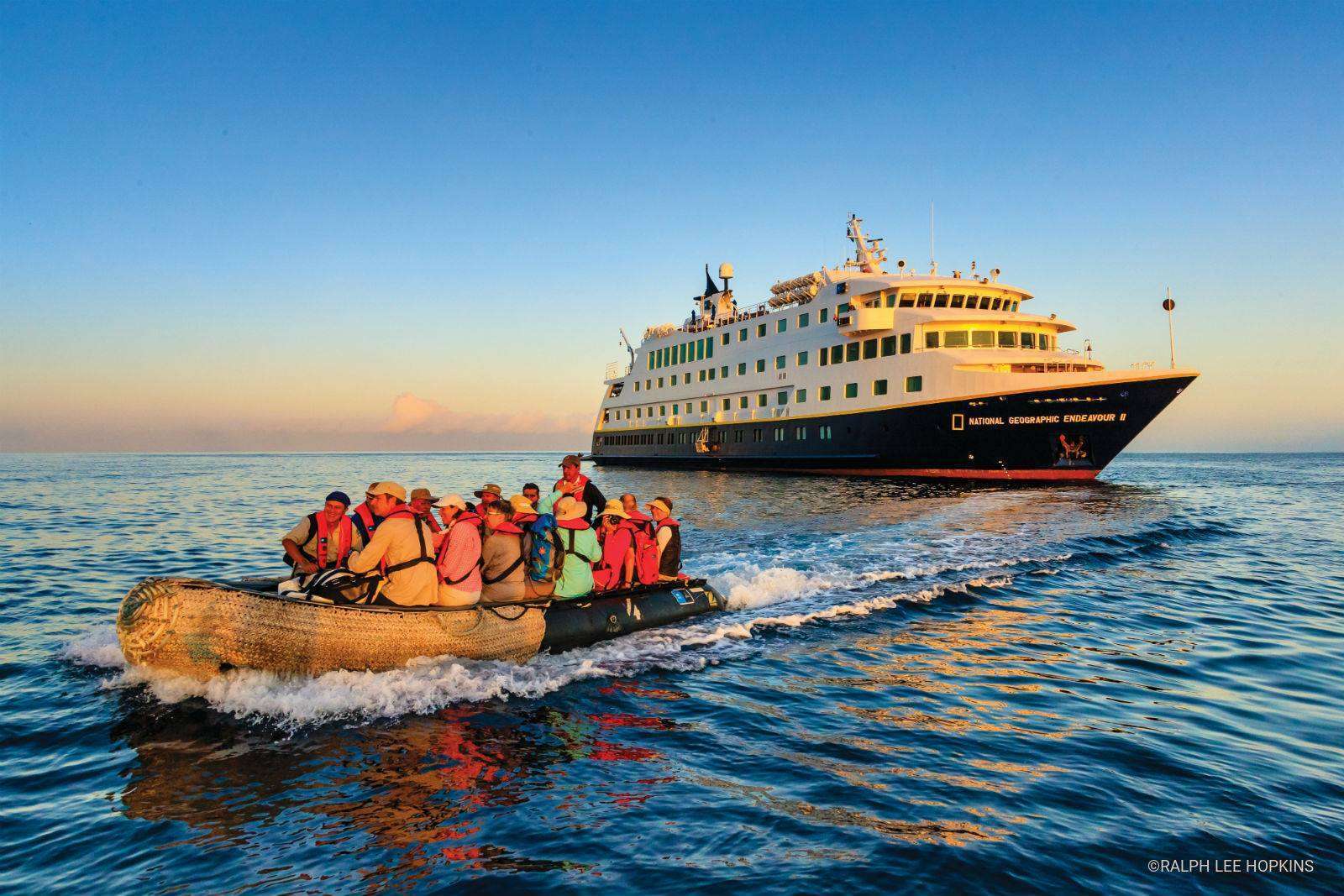
You’ll be able to snorkel nearly every day, sometimes twice a day. For those who prefer to stay dry, there’s the adventure of Endeavour’s glass bottom boat. And each day you’ll have the option to walk, hike, kayak, or Zodiac cruise, and to join a different naturalist as you choose: there are no assigned groups.
Trip Name
Epic Galápagos Photo Expedition (NG Endeavour II)
Days
17
Overview
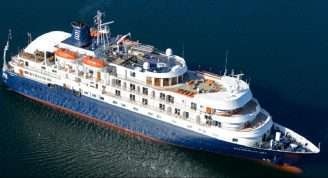
Vessel Type: Expedition Ship Length: 73 metres Passenger Capacity: 96 guests (in 53 outside cabins) Built: 2005; Newly Launched: 2016 Our newest  96-guest ship replaced Endeavour and continues to operate the exact same itineraries, with the same tools for exploration, including a glass-bottom Zodiac, and the same top team. Quiet, maneuverable with a shallow draft to get you up close, this purpose-built expedition ship was completely refitted in 2016 for Galápagos service. She is exceptionally nimble and maneuverable, with great viewing from all public spaces, large windows in cabins and suites, state-of-the-art tools for exploration, and a fast, seamless twin Zodiac loading platform. Public Areas: Ship is fully air-conditioned. Covered deck with chairs and tables; doctor’s office; fitness centre; LEXspa; global gallery; library; lounge with full-service bar and facilities for viewing and presentations; and sun deck. Our Ecuadorian captain welcomes guests to the bridge in accordance with our ‘open bridge’ policy. Cabins: All cabins face outside with windows. Each has private facilities and climate controls. Expedition Equipment: Kayaks, glass-bottom Zodiac, snorkeling gear, underwater video camera, video microscope, wet suits, and Zodiac landing craft. Special Features: Guest internet access, laundry service, and wellness program. Ship’s doctor and video chronicler are also on board.

Itinerary


Day 1 - DAY 1: Guayaquil, Ecuador
Arrive Guayaquil by late evening; it’s a short drive to the Hotel Hilton Colon, where we spend the night.
Day 2 - DAY 2: Guayaquil/ Galápagos Islands/Embark National Geographic Endeavour II
After the 1½ hour flight to Galápagos, we’ll immediately board the ship. This afternoon we will begin to explore Galápagos with a landing at the beautiful Las Bachas beaches, lined with endemic coastal plants and protected saltwater lagoons. (B, L, D)
Day 3 - DAY 3: North Seymour Island and Rabida Island
North Seymour Island is an uplifted piece of seafloor, home to land iguanas, sea lion colonies, blue-footed booby and frigate bird nesting colonies. We will spend the morning observing and photographing the rich wildlife of this islet as we hike the rocky trail. This afternoon will be the first of many great snorkeling opportunities. You can also opt to kayak along the picturesque volcanic coast. Later you’ll land on the bright red sand of a charming beach and take a hike into the island to search for hawks and other land birds to photograph. (B, L, D)
Day 4 - DAY 4: Fernandina Island
Fernandina Island is the youngest and most pristine island in Galápagos. The stark black lava flows are home to some of the largest marine iguana colonies in the archipelago, and the peculiar-looking flightless cormorants nest along the coast. Bright red Sally Lightfoot crabs, fun to photograph, scamper among the black rocks, and sea lions play along the coast against the dramatic backdrop of volcanoes. Later today, sail across the channel to Punta Vicente Roca on Isabela Island. Snorkel in a sea turtle feeding area and then take Zodiac rides along the coast to look for Galápagos fur seals and penguins. Late afternoon, gather on the outer decks to get a look inside the huge collapsed caldera of a Ecuador Volcano while crossing the Equator at sunset. (B, L, D)
Day 5 - DAY 5: Isabela Island
In 1954, over half a square mile of marine reef off the coast of Urbina Bay was uplifted almost instantaneously by as much as 15ft, and evidence of this event abounds in the area. You’ll land on a turtle nesting beach of black sand, and take a couple of hike options to look for the wildlife of the area, that includes a large land iguana nesting colony and occasional giant tortoise sightings. In the afternoon the ship repositions to the historical Tagus Cove, a sheltered bay that has been a popular anchorage for centuries of visitors, including Charles Darwin on the HMS Beagle. Activities you can choose here include a scenic hike that looks over a volcanic crater with a lake inside, Zodiac rides and kayaking outings to look for penguins, flightless cormorants and shorebirds, and even some deep water snorkeling. (B, L, D)
Day 6 - DAY 6: Santiago
Hike up into a coastal forest behind one of the largest turtle nesting beaches in Galápagos, you will explore the spectacular Buccaneer Cove by Zodiac and kayak, and enjoy snorkeling among the dense schools of reef fish that find refuge in the indented shoreline. Afternoon hikes at Puerto Egas lead you through a fascinating geological landscape of mixed ash and lava flows, tidal pools and grottoes. Inhabiting the area you will find both Galápagos sea lions and fur seals, marine iguanas, land and shore birds, and brilliant Sally Lightfoot crabs. (B, L, D)
Day 7 - DAY 7: Santa Cruz
Santa Cruz is home to the largest human settlement in the Galápagos, in the vibrant coastal town of Puerto Ayora, and is the heart of the conservation and scientific work that goes on in the islands. Both the Charles Darwin Research Station and Galápagos National Park Service headquarters are located here, and among the most successful of their jointly-run programs is a 40-year old captive breeding program for endangered species of Galápagos giant tortoises, several of which have been brought back from the brink of extinction. You’ll learn about the science and conservation work undertaken in the islands, and meet some of the key players in the local conservation world. After the visit you will walk through town to the main town dock to take Zodiacs back to the ship, with a stop at the scenic fish market on the way. This afternoon, our photo team will be hosting a Photo Seminar, at anchor in Academy Bay. This will be followed by a late-afternoon photographic outing in town. For any non-photographers we will have a shuttle service to and from town all afternoon, and offer a variety of different hiking, swimming, and kayaking options. (B, L, D)
Day 8 - DAYS 8-9: San Cristobal
This important island is the easternmost island and the political capital of the province. We will be spending a total of two days visiting this special area. The first morning you’ll visit Punta Pitt with its fascinating geology, also the only site where all three booby species that occur in the Galápagos nest together. You will take hikes up to the plateau for wonderful views, and take Zodiac cruises along the base of the cliffs to look for red-footed, Nazca and blue-footed boobies, and possibly even snorkel and kayak among young sea lions. Later the ship will reposition to one of the most impressive rocky outcrops in the archipelago, the famed Leon Dormido or “Kicker Rock”. This rock is famous for its marine life, and we will take a deep water snorkeling option among graceful sharks, sea turtles and other larger marine species. Late afternoon you’ll join us on deck for sunset cocktails as we sail around this formation. The second morning will see us depart the ship to explore the highlands of San Cristobal, a very different experience to the arid lowlands we will have seen until now. This island is famous for its freshwater, and it was here that Darwin’s Beagle returned to stock up on freshwater for the rest of its voyage home. We will drive up to the only important freshwater body in Galápagos—a 34000m² lake at 687 meters above sea level that is formed in an old volcanic crater. On the way down we will visit a semi-captive tortoise population, including the endemic Chatham tortoise, and spend time among the large sea lion colony that inhabits the picturesque waterfront of the town. The afternoon we will visit Cerro Brujo (Wizard Hill), where we will take Zodiac rides and kayaking options along the spectacular cliffs, before landing on the pretty beach for swimming and nature walks. (B, L, D)
Day 9 - DAY 10: Española
The oldest and southeastern-most of the Galápagos Islands. It is home to Darwin’s finches, Galápagos hawks, and large blue-footed and Nazca booby colonies, as well as several species endemic to this island, such as the waved albatrosses, Hood mockingbirds, and Hood lava lizards. You’ll walk among colorful red and black marine iguanas and sea lions. The morning will be spent at the spectacular Gardner Bay, home to a pristine white sand beach inhabited by extensive sea lion colonies. Activities here include exploring the beach, deep-water snorkeling, and kayaking. The afternoon will be spent hiking among the sea bird colonies at Punta Suarez. (B, L, D)
Day 10 - DAY 11: Floreana
During an early morning hike at Punta Cormorant you’ll observe flamingos and shore birds, a turtle nesting beach and fascinating vegetation. Later, while at Champion Islet, you’ll spend time looking for the endangered Charles mockingbird from our Zodiacs, then don your gear to snorkel among sea lions in clear waters. During the afternoon, you’ll explore the historical Post Office Bay by Zodiac and kayak, then land on one of the same beaches Charles Darwin set foot on, and check the barrel originally set up by 18th century whalers for mail. (B, L, D)
Day 11 - DAY 12: Santa Cruz
You’ll leave the ship early and head into the lush highlands where giant tortoises forage, to explore some very different ecosystems to those encountered in the lowlands and spend time observing and photographing these relics of another age. We’ll have lunch in the highlands, then drive to visit a charming sugar cane mill located in the highlands called El Trapiche, then continue to the coast to spend the rest of the afternoon at the picturesque El Garrapatero beach. (B, L, D)
Day 12 - DAY 13: Dragon Hill and Guy Fawkes/El Eden and Daphne Major
Today you will hike through giant cactus and incense tree forests to reach Dragon Hill, the habitat of the colorful Santa Cruz land iguanas that have been brought back from the brink of extinction. Later you will have the opportunity to snorkel along the steep, invertebrate-coated walls of the islets of Guy Fawkes. You will learn about the ground-breaking research of scientists Peter and Rosemary Grant into Natural Selection among the finches of Daphne Major as the ship circumnavigates the famous islet. (B, L, D)
Day 13 - DAY 14: Bartolome and Sombrero Chino
This morning you will visit Bartolomé, an enchanting landscape where lava, mangroves and golden sand converge. You will have the opportunity for an early morning hike to the summit of the cone, with stunning views of the famous Pinnacle Rock and the surrounding volcanic landscape. Later in the morning, you will enjoy some wonderful snorkeling from the beach, where you might encounter sea lions, small reef sharks and even Galápagos penguins. In the afternoon you will continue to explore some of the small islets just off the coast of Santiago Island, this time a small volcano called “Sombrero Chino”, due to its resemblance to a Chinese hat. The stark lava flows form tubes and caves that are an important nesting area for Galápagos penguins, and the waters bathing the shore are rich in fish life. (B, L, D)
Day 14 - DAY 15: Genovesa
The National Geographic Endeavour II sails into the caldera of Genovesa, known as “bird island”, where you’ll enjoy hikes among nesting colonies of swallow-tailed gulls, frigate birds, red-footed and Nazca boobies all while keeping a look out for hunting short-eared owls. You’ll ride Zodiacs and kayak along the base of the caldera wall, and snorkel among large schools of parrot fish and other tropical species. (B, L, D)
Day 15 - DAY 16: Galápagos/Disembark/Guayaquil
Disembark and fly to Guayaquil. The afternoon and evening are at your leisure at the Hotel Hilton Colon. (B)
Day 16 - DAY 17: Guayaquil/Home
Depart Guayaquil this morning, arriving home the same day. (B)
Day 17 - Please Note:
All day-by-day breakdowns are a sampling of the places we intend to visit, conditions permitting.

Trip Dates

StartEndPrice FromRoom Type
24-11-201710-12-2017AUD$32,450Suite C
24-11-201710-12-2017AUD$24,890Category 2 Solo
24-11-201710-12-2017AUD$19,850Category 2
24-11-201710-12-2017AUD$17,400Category 1
24-11-201710-12-2017AUD$27,330Category 3 Solo
24-11-201710-12-2017AUD$28,600Suite A
24-11-201710-12-2017AUD$21,850Category 3
24-11-201710-12-2017AUD$30,700Suite B
24-11-201710-12-2017AUD$23,980Category 4

Inclusions

    • Explore the Galápagos archipelago and undersea in great depth with hikes and Zodiac cruises paced for photo ops and timed to take advantage of the best light
    • Land on every major island in the Galápagos archipelago and explore all the major sites over 17 days
    • Shoot with and learn from a team of six top photographers while getting timely tips in the field
    • Go on daily photo assignments to help build your personal portfolio
    • Use a special, mid-voyage photo edited seminar with expert image critiques to boost your skills
    • Go on a special photography tour of the Charles Darwin Research Station.

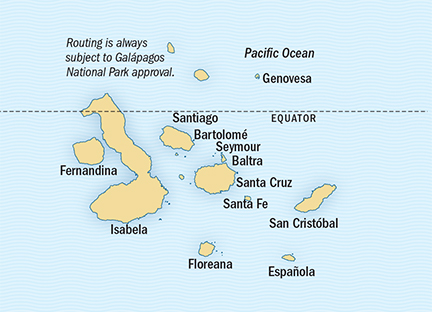
Map