



Description
Cruise in the tuamotu: lagoons and coconut trees
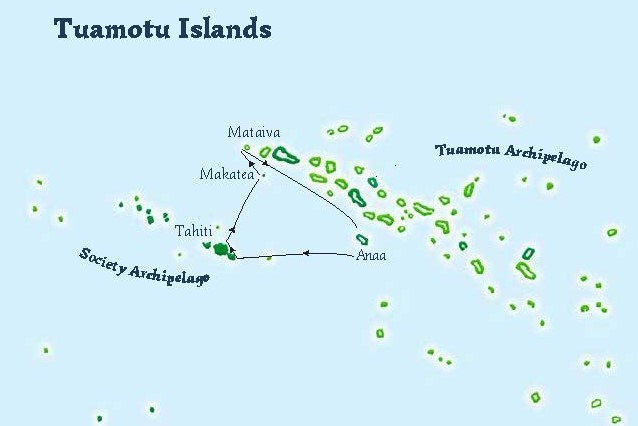
Uspended between the sky and the sea, the Tuamotu atolls are today synonymous with escape and paradise. And for visitors looking for an complete change of scenery and fabulous lagoons, these islands are the perfect location! Long considered dangerous for its low altitude islands, currents, reefs awash, and narrow passes. sailing in to the Tuamotu waters is indeed a delicate procedure with many obstacles to overcome before entering the magical turquoise lagoons! Today, however, with airline transportation, one can very easily reach many of these previously inaccessible rings of coral.
In Polynesian mythology, one legend tells the story of the god Tukerai who shook the sea, and is said to have scattered the string of 78 motu (islets) of the archipelago over 800,000 km² of ocean, with only 880 km² of land. The historic past of the Tuamotu is still unclear. The atolls could have been colonized from Tahiti and the Marquesas around 1000 AD, but the precise origin of the inhabitants and the settlement periods are not entirely clear.
In 1521 Magellan sailed through the maze of awash islands and reached Pukapuka, the first Pacific atoll discovered by Europeans! They were mapped by the Portuguese Quiros in 1605, and the Tuamotu islands were later named the “Dangerous Archipelago” by Bougainville because of the many shipwrecks caused by reefs. Between 1770 and 1810, almost thirty vessels crashed on these treacherous coral reefs! It took nearly three centuries for navigators to list all of the 78 atolls that make up the archipelago, none of them having spent much time among these islands that held no economic interest. For a long time, the archipelago was called Pa’umotu (“Low Islands”) and since the middle of the last century, the Tahitian name “Tuamotu” has prevailed.
With large coconut plantations, established from the 19th Century onwards, the economy of this archipelago is largely based on copra cultivation (copra is shipped to Tahiti for the manufacture of coconut oil). The cultivation of the black pearl has profoundly changed the Paumotu way of life. The Tuamotu Islands are now a must-see destination for all lovers of water sports with many activities on offer, including scuba diving in Rangiroa and Fakarava.