
fbpx

Falklands – South Georgia – Antarctica – 20 Days (Hondius)

Falklands – South Georgia – Antarctica – 20 Days (Hondius)

From $15,350 USD

Description

This Falkland Islands, South Georgia, and Antarctic Peninsula cruise is an animal-lover’s dream come true. The expedition explores one of the last untamed areas on Earth – a land of ruggedly beautiful landscapes and amazingly varied wildlife.

Trip Name
Falklands - South Georgia - Antarctica - 20 Days (Hondius)
Days
20
Overview
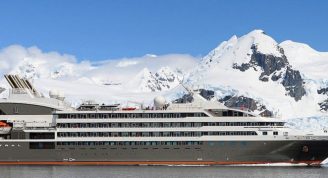
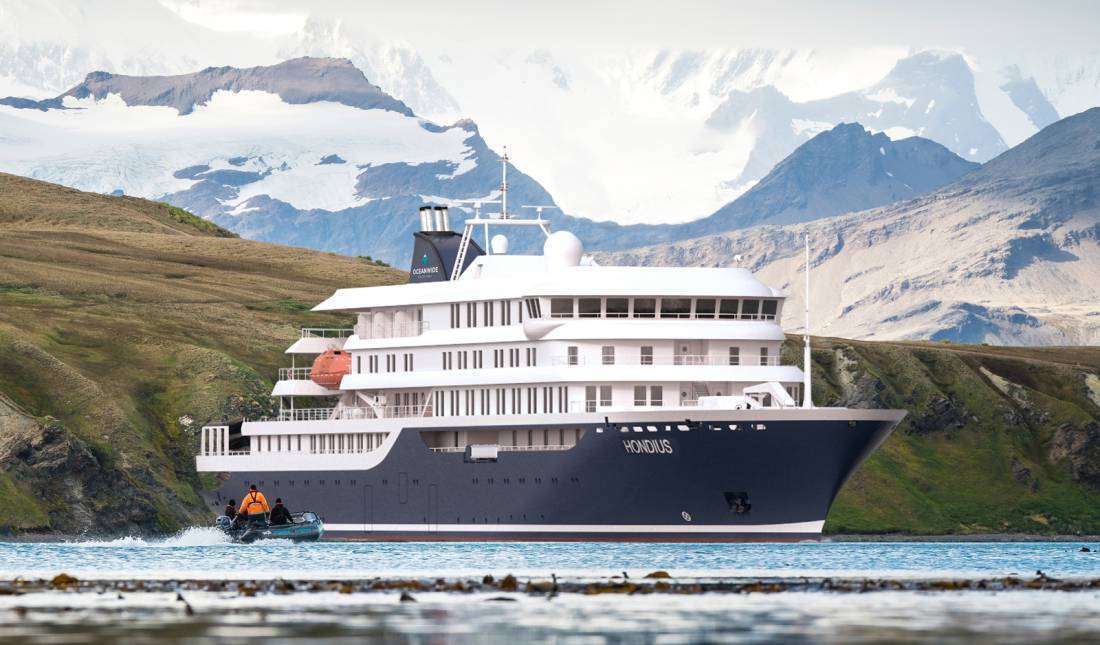
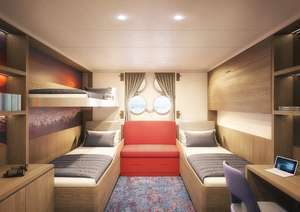
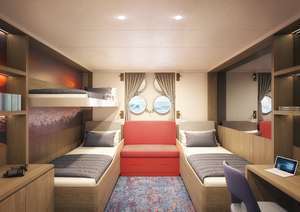
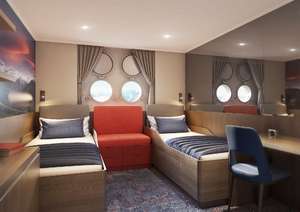
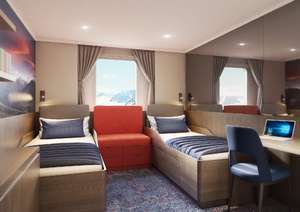
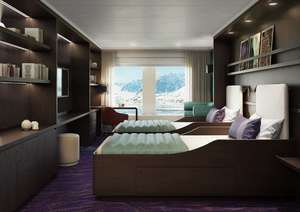
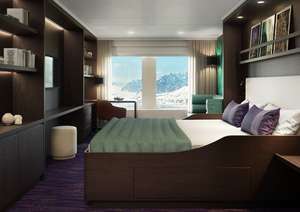
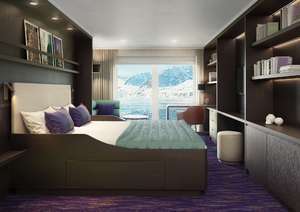
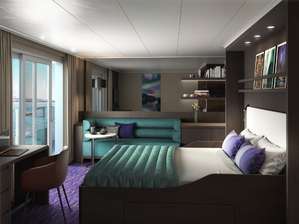
Vessel Type: Polar Class Expedition Ship Length: 107.6 metres Passenger Capacity: 174 Built: 2019 Hondius is the first-registered Polar Class 6 vessel in the world, meeting the latest and highest Lloyd’s Register demands for ice-strengthened cruise vessels. Hondius also exceeds the requirements of the Polar Code as adopted by the International Maritime Organization (IMO), allowing you to enjoy the polar regions as much as possible while impacting them as little as possible. Upon completion, Hondius will be the most flexible, advanced, innovative ice-strengthened vessel in the polar regions. It is optimized for exploratory voyages that provide you the utmost first-hand contact with the Arctic and Antarctica. Hotel comfort, expedition class Hondius offers high-quality accommodation for 176 passengers in one spacious suite (35 square meters, 377 square feet), six grand suites with balconies (27 square meters, 291 square feet), eight junior suites (19 to 20 square meters, 205 to 215 square feet), eight superior cabins (20 to 21 square meters, 215 to 226 square feet), 11 twin deluxe cabins, (19 to 21 square meters, 205 to 226 square feet), 14 twin window cabins (12 to 14 square meters, 129 to 151 square feet) as well as 28 twin porthole cabins, two triple porthole cabins, and four quadruple porthole cabins that vary in size from 12 to 18 square meters, or 129 to 194 square feet. The passenger capacity certificate for Hondius is 196 persons. One deck consists of a large observation lounge and separate lecture room, which are reserved for a wide variety of interactive workshops, exhibitions, and performances particular to Hondius. Though elegantly designed in stylish mid-century modern décor, this vessel holds true to Oceanwide’s distinctive cozy and informal atmosphere.  Swift & safe ship-to-shore operations It is our philosophy to keep sea time short so that we can focus instead on fast, effective access to shore and near-shore activities. To give you the maximum contact with the nature and wildlife you traveled so far to see, we employ a tough fleet of rigid-hull inflatable Zodiac boats that guarantee swift and safe landing operations for all passengers at the same time. Hondius has two separate gangways and a sheltered indoor Zodiac embarkation platform that can also be used for special outdoor activities, such as kayaking.   The fast, flexible, friendly heart of the polar regions Our top priority is taking advantage of every wildlife and terrain opportunity as it occurs. To keep our itineraries flexible itineraries and our response time rapid, Hondius is equipped with advanced stabilizers and two main engines capable of powering the vessel up to 15 knots. But Hondius sacrifices no warmth to achieve its keen polar edge: You will have 72 crew and staff members (including expedition and hotel staff) at your service while on board, ensuring that what little time you do spend on the ship you will spend comfortably entertained.  
Itinerary


Day 1 - Day 1: End of the world, start of a journey
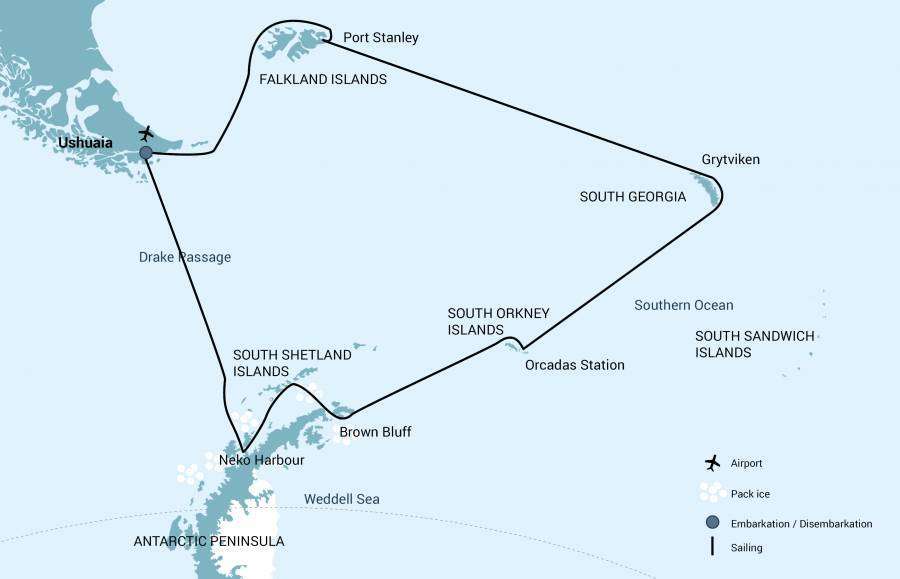
Your voyage begins where the world drops off. Ushuaia, Argentina, reputed to be the southernmost city on the planet, is located on the far southern tip of South America. Starting in the afternoon, you embark from this small resort town on Tierra del Fuego, nicknamed “The End of the World,” and sail the mountain-fringed Beagle Channel for the remainder of the evening.
Day 2 - Day 2: The winged life of the westerlies
Several species of albatross follow the vessel into the westerlies, along with storm petrels, shearwaters, and diving petrels.
Day 3 - Day 3: Finding the Falklands
The Falkland (Malvinas) Islands offer an abundance of wildlife that is easily approachable, though caution is always advised. These islands are largely unknown gems, the site of a 1982 war between the UK and Argentina. Not only do various species of bird live here, but chances are great you’ll see both Peale’s dolphins and Commerson’s dolphins in the surrounding waters. During this segment of the voyage, you may visit the following sites:Carcass Island – Despite its name, this island is pleasantly rodent-free and hence bounteous with birdlife. Anything from breeding Magellanic penguins and gentoos to numerous waders and passerine birds (including Cobb’s wrens and tussock-birds) live here.Saunders Island – On Saunders Island you can see the black-browed albatross and its sometimes-clumsy landings, along with breeding imperial shags and rockhopper penguins. King penguins, Magellanic penguins, and gentoos are also found here.
Day 4 - Day 4: The seat of Falklands culture
The capital of the Falklands and center of its culture, Port Stanley has some Victorian-era charm: colorful houses, well-tended gardens, and English-style pubs are all to be found here. You can also see several century-old clipper ships nearby, silent witnesses to the hardships of 19th century sailors. The small but interesting museum is also worth a visit, covering the early days of settlement up to the Falklands War. Approximately 2,100 people live in Port Stanley. Feel free to wander at will, though be aware that admission fees to local attractions are not included in the voyage.
Day 5 - Day 5 – 6: Once more to the sea
En route to South Georgia, you now cross the Antarctic Convergence. The temperature cools considerably within the space of a few hours, and nutritious water rises to the surface of the sea due to colliding water columns. This phenomenon attracts a multitude of seabirds near the ship, including several species of albatross, shearwaters, petrels, prions, and skuas.
Day 6 - Day 7 – 10: South Georgia Journey
Today you arrive at the first South Georgia activity site. Please keep in mind that weather conditions in this area can be challenging, largely dictating the program.Over the next several days, you have a chance to visit the following sites:Prion Island – This location is closed during the early part of the wandering albatross breeding season (November 20 – January 7). From January on, the breeding adults have found their partners and are sitting on eggs or nursing their chicks. Enjoy witnessing the gentle nature of these animals, which possess the largest wingspan of any birds in the world.Fortuna Bay – Near beaches inhabited by various penguins and seals, you have the chance to follow the final leg of Shackleton’s route to the abandoned whaling village of Stromness. This path cuts across the mountain pass beyond Shackleton’s Waterfall, and as the terrain is partly swampy, be prepared to cross a few small streams.Salisbury Plain, St. Andrews Bay, Gold Harbour – These sites not only house the three largest king penguin colonies in South Georgia, they’re also three of the world’s largest breeding beaches for southern elephant seals. Only during this time of year do they peak in their breeding cycle. Watch the four-ton bulls keep a constant vigil (and occasionally fight) over territories where dozens of females have just given birth or are about to deliver. You can also see a substantial number of Antarctic fur seals here during the breeding season (December – January).Grytviken – In this abandoned whaling station, king penguins walk the streets and elephant seals lie around like they own the place – because they basically do. Here you might be able to see the South Georgia Museum as well as Shackleton’s grave.
Day 7 - Day 11: Southward bound
There may be sea ice on this route, and at the edge of the ice some south polar skuas and snow petrels could join the other seabirds trailing the vessel south.
Day 8 - Day 12: The scenic vistas of South Orkney
Depending on the conditions, you might visit Orcadas Base, an Argentine scientific station on Laurie Island in the South Orkney archipelago. The personnel here will happily show you their facility, where you can enjoy expansive views of the surrounding glaciers. If a visit isn’t possible, you may instead land in Signy Island’s Shingle Cove.
Day 9 - Day 13: Last push to the Antarctic
Enormous icebergs and a fair chance of fin whale sightings ensure there’s never a dull moment on this last sea voyage south. Also, your best chance to spot Antarctic petrels is here.
Day 10 - Day 14 – 17: Awe-inspiring Antarctica
If the ice conditions permit, you now sail into the Weddell Sea. Here colossal tabular icebergs herald your arrival to the eastern side of the Antarctic Peninsula. Paulet Island, with its large population of Adélie penguins, is a possible stop. You might also visit Brown Bluff, located in the ice-clogged Antarctic Sound, where you could get the chance to set foot on the Antarctic Continent itself. If conditions aren’t favorable to enter the Weddell Sea from the east, the ship will set course for Elephant Island and head into the Bransfield Strait, between South Shetland Island and the Antarctic Peninsula. Here you can attempt to access the Antarctic Sound from the northwest.This extended voyage gives you the chance to sail even farther down the ice-sculpted western Antarctic Peninsula. You are likely to enter the northern Gerlache Strait for your last activity before venturing into the Drake Passage. Here there are several opportunities for great landings in an epic landscape of alpine peaks and mammoth glaciers calving at sea level. Gentoo penguins, leopard seals, Weddell seals, humpback whales, and minke whales are often seen here.The breathtaking scenery continues in the southern Gerlache Strait, and if ice conditions allow, we may even reach Lemaire Channel. Conditions on the Drake Passage determine the exact time of departure.
Day 11 - Day 17 – 19: Familiar seas, familiar friends
Your return voyage is far from lonely. While crossing the Drake, you’re again greeted by the vast array of seabirds remembered from the passage south. But they seem a little more familiar to you now, and you to them.
Day 12 - Day 20: There and back again
Every adventure, no matter how grand, must eventually come to an end. It’s now time to disembark in Ushuaia, but with memories that will accompany you wherever your next adventure lies.
Day 13 - Please Note:
All itineraries are for guidance only. Programs may vary depending on local ice, weather, and wildlife conditions. The on-board expedition leader will determine the final itinerary. Flexibility is paramount for expedition cruises. Average cruising speed of m/v Hondius is 10.5 knots .

Trip Dates

StartEndPrice FromRoom Type
07-01-202026-01-2020USD$15,350Quadruple Porthole
07-01-202026-01-2020USD$16,700Triple Porthole
07-01-202026-01-2020USD$18,500Twin Porthole
07-01-202026-01-2020USD$19,300Twin Window
07-01-202026-01-2020USD$20,700Twin Deluxe
07-01-202026-01-2020USD$22,150Superior
07-01-202026-01-2020USD$23,700Junior Suite
07-01-202026-01-2020USD$27,250Grand Suite With Private Balcony
07-01-202026-01-2020USD$31,350Hondius Suite

Inclusions

    • Enjoy Hondius Special Activities. Being a Hondius passenger comes with its share of perks, among them an extensive array of activities entirely unique to the ship itself. In addition to vibrant musical acts and performances, Hondius offers a wide range of interactive workshops that explore such topics as astronomy, navigation, and other related fields. These interactive workshops, captivating exhibitions, and vibrant performances are planned both on the ship as well as out in nature.
    • Meet King Penguin. Second in size only to the emperor penguin, these colorful divers look so different than their own chicks that they were once thought to be a different species.
    • See Weddell Seal. Named after the British navigator and sailor James Weddell, these extensively studied seals live farther south than any other mammal.
    • Encounter Black-browed Albatross. So efficient in the air that their in-flight heart rate barely rises above resting, these sub-Antarctic birds pack a stomach full of oil they can spit at would-be attackers.

Map