fbpx

Tibet: Beijing to Kathmandu Overland

Sale!

Tibet: Beijing to Kathmandu Overland

Was From $ 5,985 AUD
Now From $ 5,032 AUD
Sale!

Description

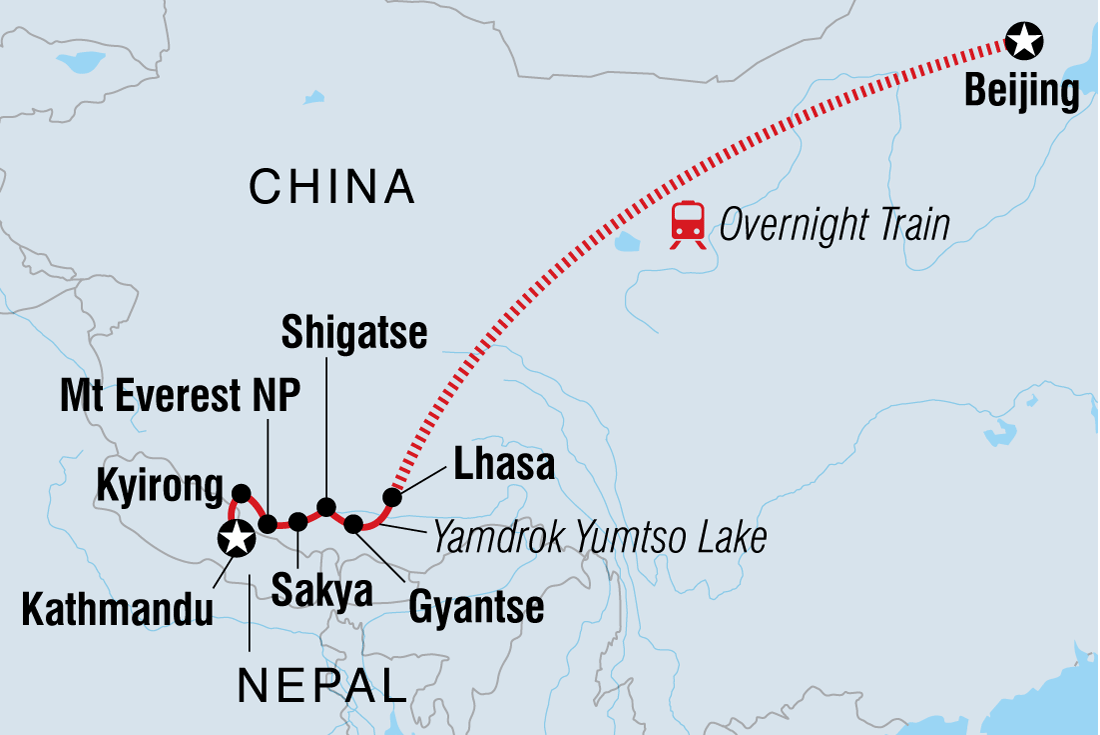
Go on an epic 5000-km overland journey through imperial Beijing and the soaring landscapes of Tibet, ending in Nepal’s culturally-rich capital, Kathmandu. Experience one of the world’s greatest train journeys, discover the highland haven of Lhasa, watch daily Tibetan life play out in Gyantse and visit the world’s highest monastery perched in the heart of the Himalayas. Temples aplenty, divine landscapes and iconic views of Mt Everest await you. You’ll find yourself meditating with a monk and wandering Kathmandu’s maze-like bazaars – celebrating Buddhist cultures past and present, this insightful journey to the Roof of the World is simply unforgettable.

Trip Name
Tibet: Beijing to Kathmandu Overland
Last Updated
1970-01-01
Days
15
Capacity
12
Highlights
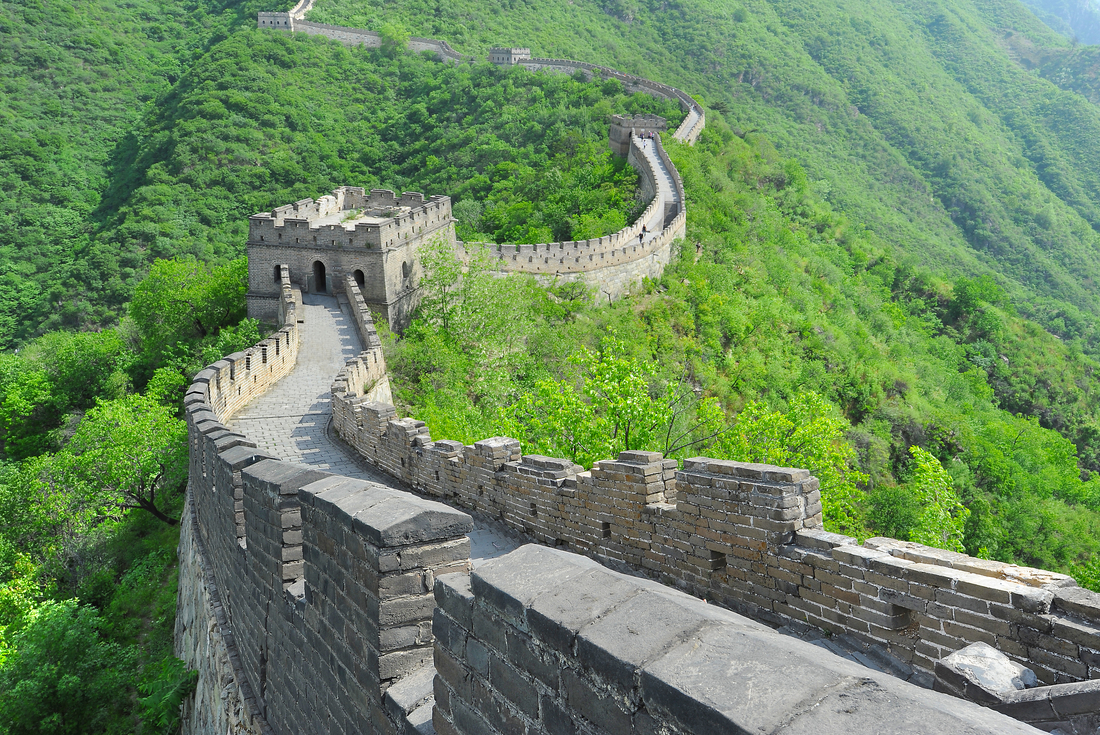
  • Witness the grandeur of China’s ancient history first-hand when you explore and walk the Mutianyu section of the epic Great Wall.
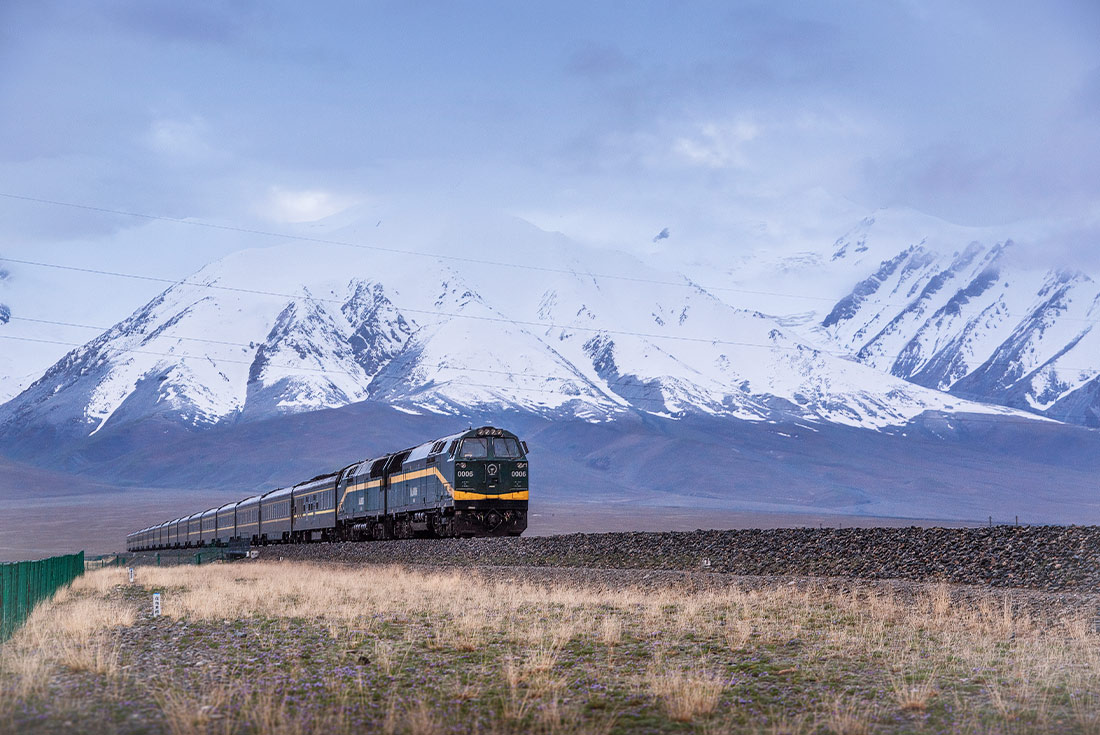
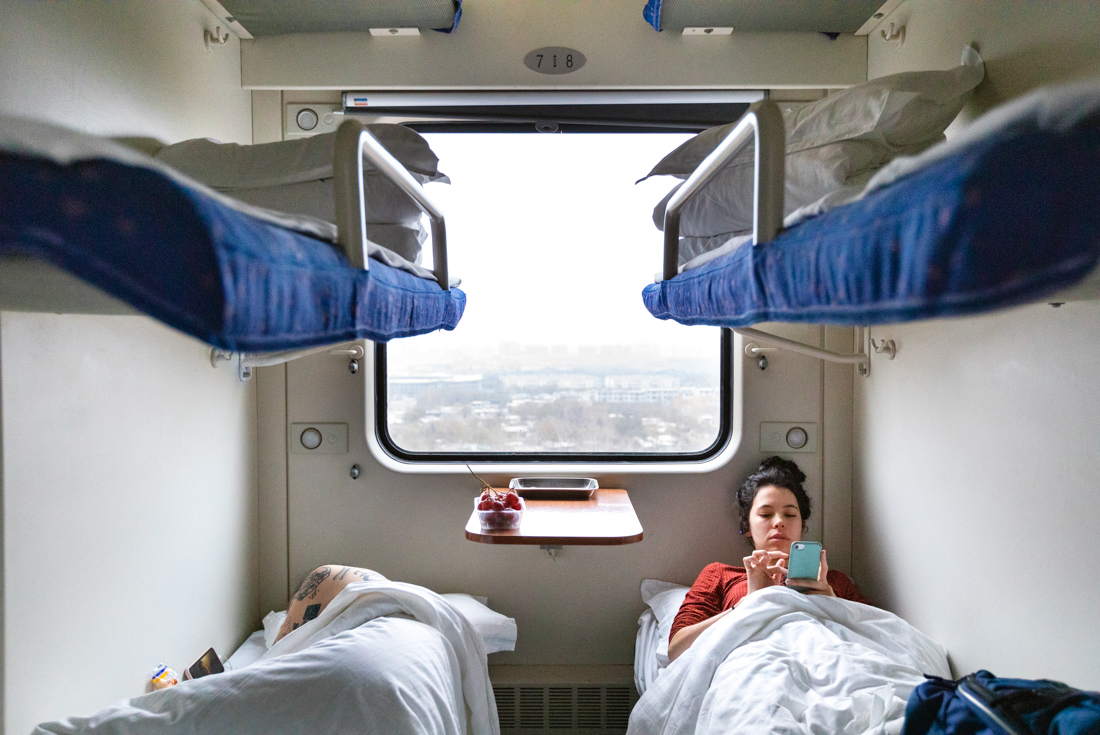
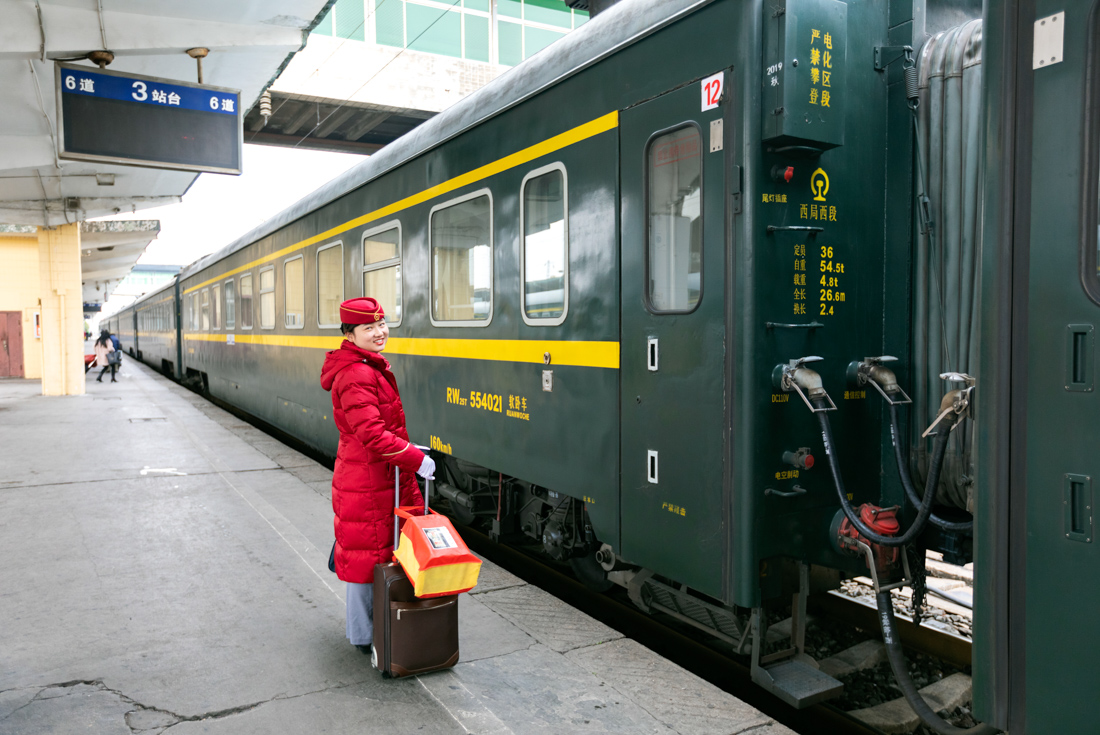
  • Sit back and relax on one of the world’s greatest train journeys – a marathon 45-hour ride to the Roof of the World, passing by mountainous and remote terrain, and the occasional grazing yak!
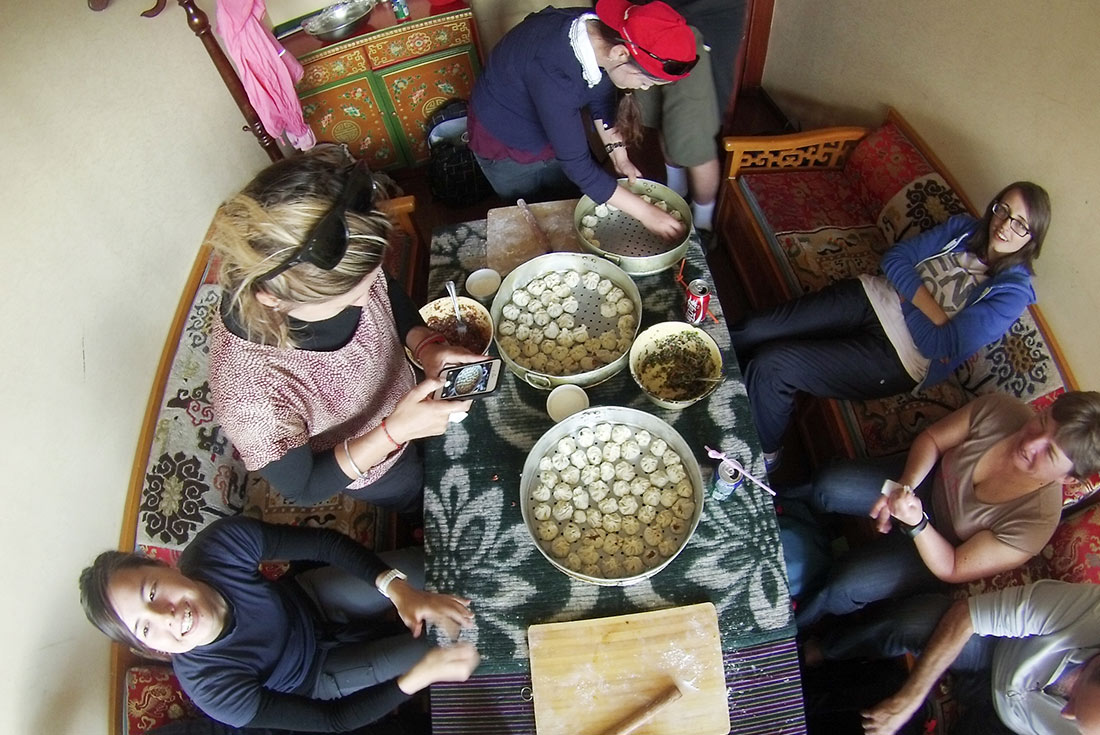
  • Immerse yourself in Tibetan culture, from the spiritual side – with monastery visits, pilgrim trails and a monk-led meditation – to traditional daily life, with a momo-making class and Tibetan family home stay.
  • Climb magnificent mountain passes and thrilling peaks on your scenic overland journey to see the mightiest of them all – Mt Everest – and visit the world’s highest monastery on your way.
  • Learn about Tibetan culture and modern life on the plateau with a Tibetan leader by your side, giving you expert local insights.
Itinerary

ITINERARY CHANGES Our itineraries are updated regularly throughout the year based on customer feedback and to reflect the current situation in each destination. The information included in this Essential Trip Information may therefore differ from when you first booked your trip. It's important that you review this information prior to travel so that you have the latest updates. Due to weather, local conditions, transport schedules, public holidays, political unrest or other factors, further changes may be necessary to your itinerary once in-country. Your group leader or local representative will keep you up to date with any such changes once your trip is underway and has the authority to amend or cancel any part of the trip itinerary if deemed necessary due to safety concerns. , OPTIONAL ACTIVITIES A selection of optional activities that have been popular with past travellers are listed in the day-to-day itinerary. This isn't an exhaustive list and should be used as a guide only for some of what might be available. Prices are approximate, are for entrance fees only, and don’t include transport to and from the sites or local guides unless indicated. All activities are subject to availability, and maybe on a join-in basis. It may not be possible to do all the activities listed in the time available at each destination, so some pre-planning for what you are most interested in is advised. When it's recommended that travellers pre-book these activities, look for a note in the Special Information section of the day-to-day itinerary. For most, they can either be organised independently on the day, or let your group leader or local representative know you are interested at the Welcome Meeting and they can assist. Where activities are considered medium or high risk, we work with operators whose safety and credentials we have sighted and assessed. Although it is possible that you may find the same activity cheaper with another operator on the ground, we cannot vouch for the safety or quality of that operator. Medium and high-risk activities not listed above have not been assessed by us and as such our staff and group leader or local representative are unable to assist you with organising these activities. Activities that contravene our Responsible Travel policies are also not listed. Please remember that the decision to partake in any activity not listed is at your own discretion and risk., PASSPORTS USED FOR ENTRY TO TOURISM SITES AND TRAIN STATIONS International visitors will have their passport scanned upon entry to tourism sites and at train stations in China. The passport acts as an entrance ticket and it takes 1-2mins for scanning and entry. This means that it can take 20-30mins for our groups to enter some locations, depending on group size and processing capacity in each location. Chinese nationals have their ID cards scanned at these locations and these are processed instantly.

Day 1 - Beijing
Huanying! Welcome to China. Touch down in the capital, Beijing, ready for a high-altitude adventure. Your adventure begins with a welcome meeting at 6 pm, where you’ll meet your trip leader and travel companions. After this important meeting, why not get together with your group for an optional dinner – maybe seek out one of the best Peking duck restaurants in the city. Your group leader will be able to recommend some great spots where you can eat this delicious speciality.
Day 2 - Transit by Train
Today, you’ll take an early morning drive to visit one of the most well-preserved areas of the Great Wall – the Mutianyu section. An incredible piece of engineering, the wall stretches 6000 km westwards from the mountain ridges north of Beijing. It's a 30-minute climb up some steep steps to reach it, but you’ll be rewarded with a panoramic view of the Great Wall winding along the mountains. Travel back to the city and then in the late afternoon, transfer to Beijing West Railway Station – one of the biggest and busiest in the world – to start your epic train journey to Lhasa.
Day 3 - Transit by Train
Today, all you can do is sit back, relax and take in the mountainous ridges and remote terrain along the highest railway in the world. This journey takes you through the major cities of Xi'an, Lanzhou and Xining, and across the wide-open highlands of the Qinghai-Tibet Plateau. Keep an eye out for grazing yaks, sheep and a glistening lake along the way. On this second night, you’ll climb in altitude as you gaze out at the changing landscapes through the windows – snow-dusted black cliffs and mountain peaks pass by, illuminated by moonlight.
Day 4 - Lhasa
After lunch, you’ll say goodbye to your local train pals and your home for the last two nights and be greeted by Lhasa's crisp mountain air. This colourful and historic holy city of is situated in a small valley, and for hundreds of years it was kept secluded from the outside world. Lhasa remains an intriguing and spiritually significant city with deeply fascinating cultures, sights and stories. Check into your hotel later this afternoon and begin to get acclimatised to both the city and the altitude.
Day 5 - Lhasa
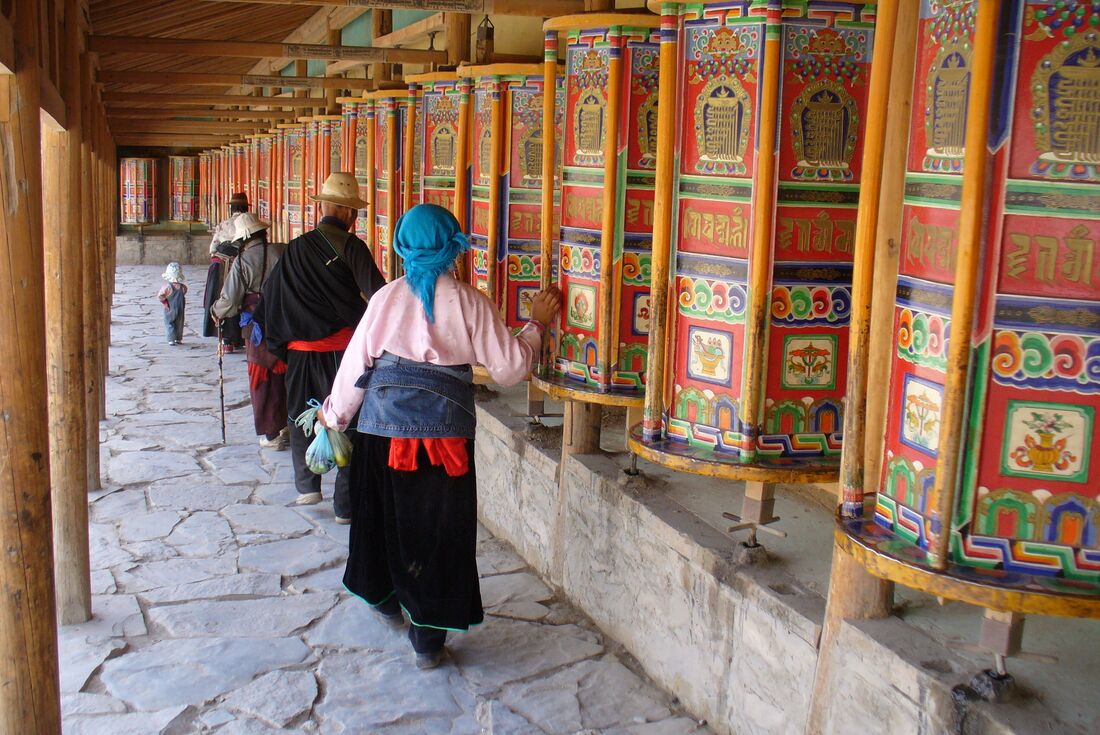
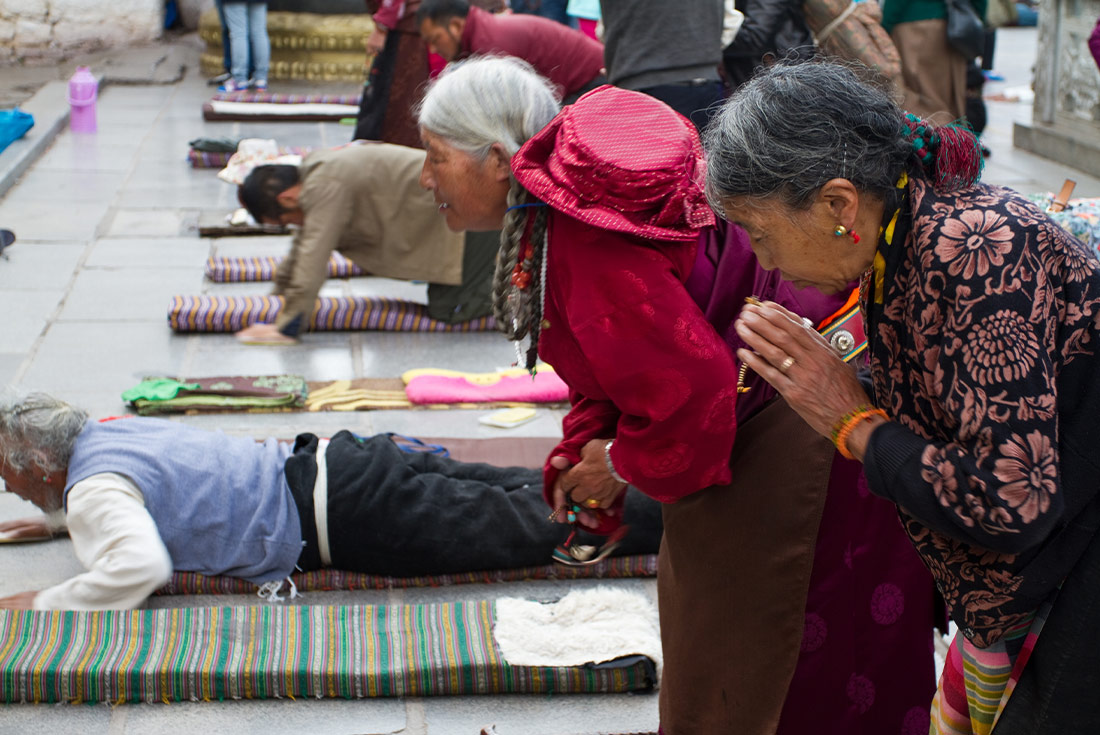
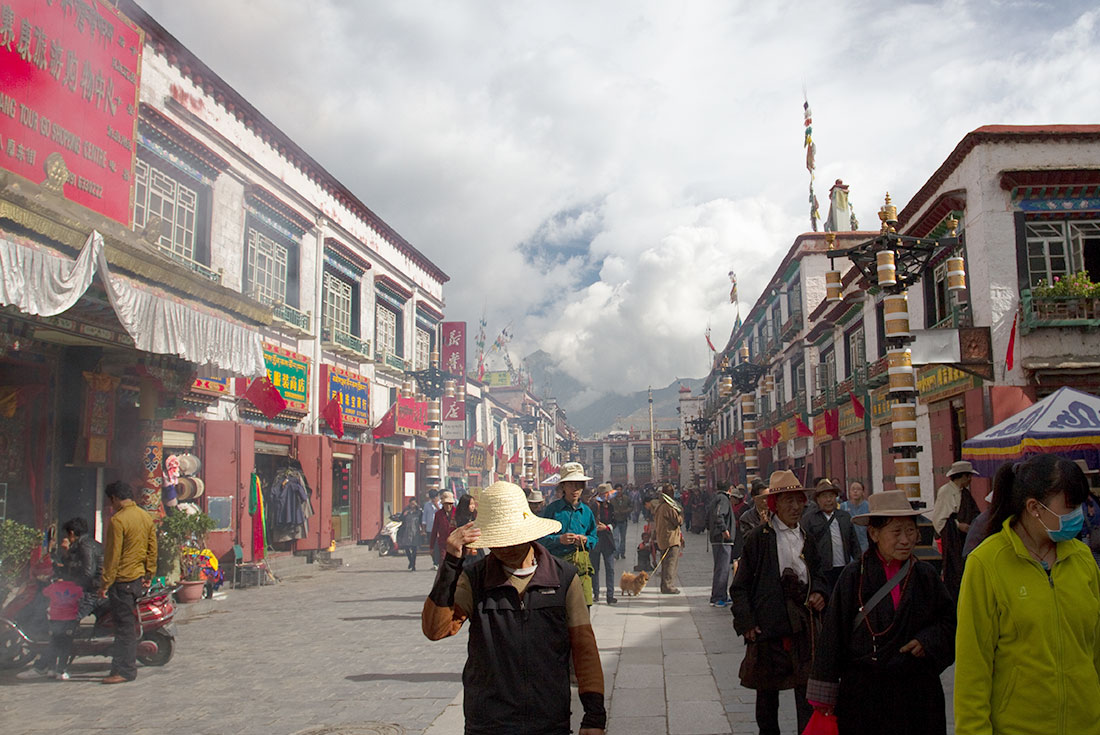
Start your first full day in Lhasa with a walking tour of the Old Town. Walk among pilgrims on Barkhor Street, otherwise known as Holy Road. Encircling the Jokhang Temple, this incense-scented street is where Tibetan Buddhists perform meditative koras, following the loop in a clockwise direction. Around noon, visit a local family to learn how tsampa (ground barley, a Tibetan staple), yak butter tea and momos (moreish Tibetan dumplings) are made. After lunch, visit the Sera Monastery and witness the resident monks taking part in heated debates in the courtyards – their exaggerated gestures and the passion they display make this one of the most exciting people-watching spots in Lhasa.
Day 6 - Lhasa
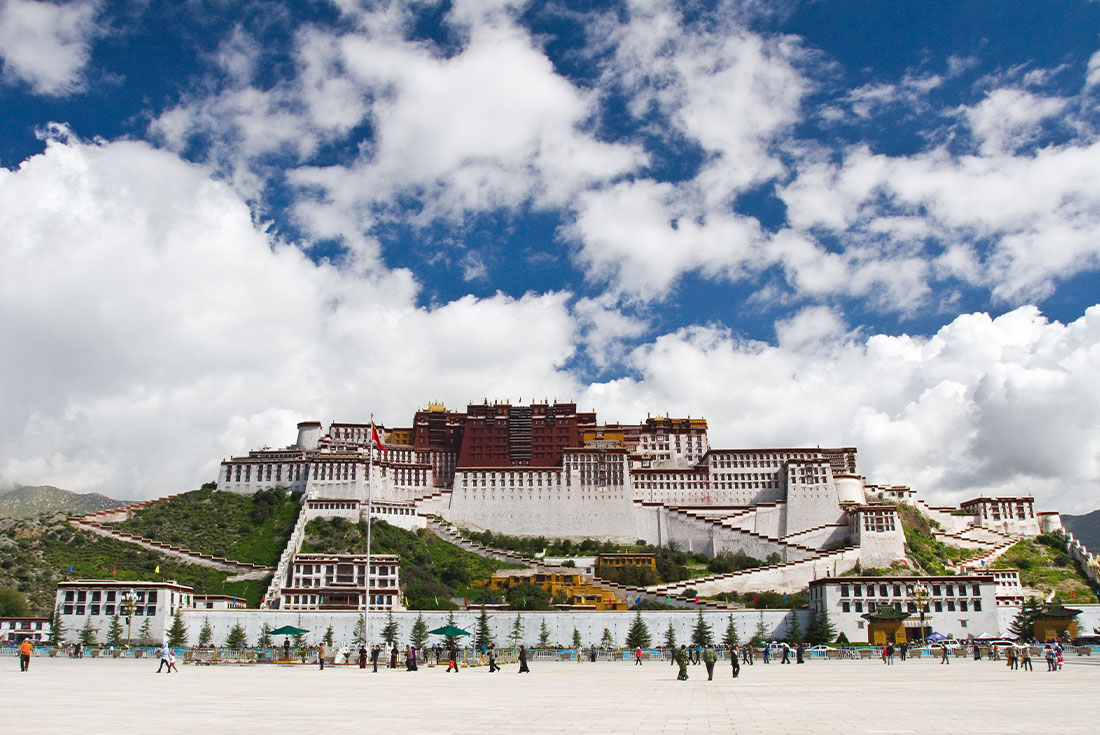
This morning, visit Potala Palace, the incredible former winter home of the Dalai Lamas, perched 130 m above the city. The palace is divided into two parts – the White Palace (secular and used as offices) and the Red Palace (home to chapels, shrines and tombs of Dalai Lamas). Learn about this architectural wonder with a local guide. After, visit Jokhang Temple – considered the spiritual heart and most sacred temple of Tibet, it attracts steady waves of pilgrims. Explore this World Heritage-listed site and learn a thing or two about its history. According to legend, multiple attempts to build the temple at other sites failed, until it was built atop an ancient, sacred lake. Then, enjoy some free time and maybe find a Tibetan tea house where you can try some milky Tibetan sweet tea or savoury yak butter tea and mingle with the hospitable locals.
Day 7 - Gyantse
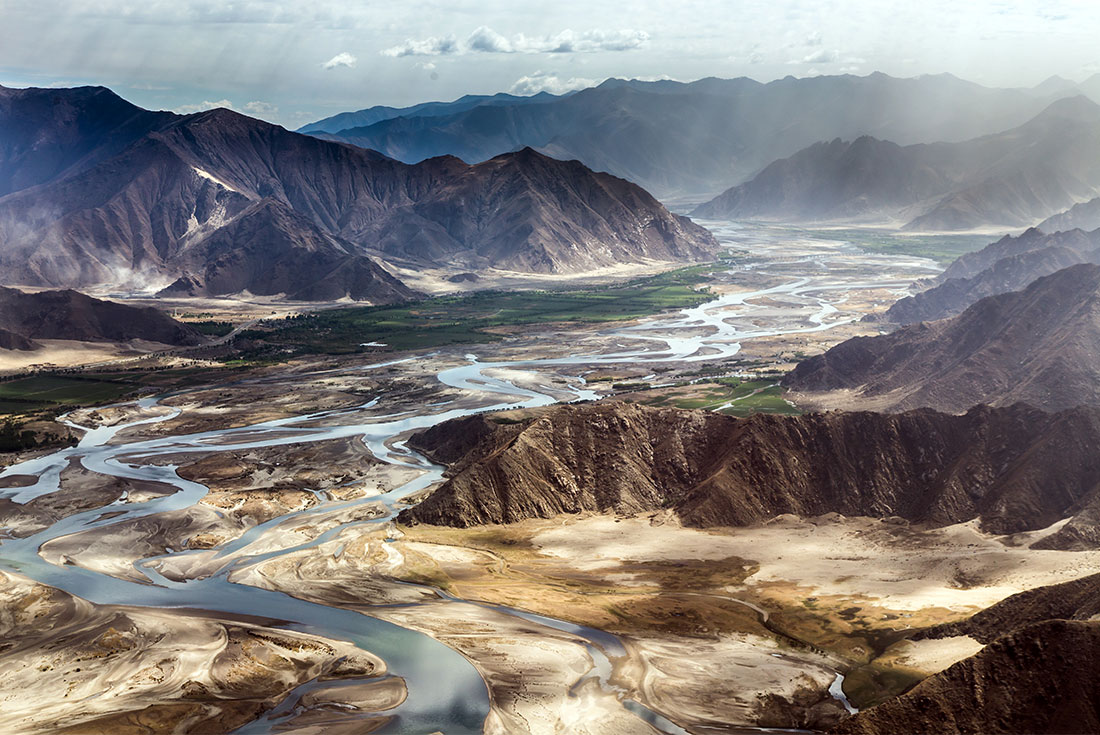
Traverse a scenic section of the Tibetan Plateau on a long drive heading towards Gyantse, crossing over mountain passes as you twist through dramatic valleys and peaks. Travel past the shimmering Yamdrok Lake and up the Khama La Pass, spot sheep herder villages scattered along the banks and marvel at the towering Noijin Kangsang – the peak of the Lhagoi Kangri Mountain Range. You’ll stop by the roadside town of Nangartse for lunch before driving the Karo La Pass, then descending to your destination for tonight – Gyantse. This small rural town is the perfect place to simply wander around and watch contemporary Tibetan life play out in front of you – here, pilgrims mix with pop music, cows stroll past cowboys on motorbikes and monks go about their daily business.
Day 8 - Shigatse
This morning, check out the Gyantse Kumbum – a layered stupa (a domed, Buddhist structure) on the grounds of the Pelkor Chode Monastery. You can visit each floor of this six-level structure – as you wind up the floors past several tiny chapels, the air becomes thicker with incense and the passageways get narrower. Later today, there’s a chance to experience a simple lunch at a family home, which is a great opportunity to listen to some personal stories of life in Tibet while enjoying warm hospitality. After lunch, head towards Tibet’s second-largest city, Shigatse. Translating to ‘the fertile land’, Shigatse is a busy, mountain-clasped city that’s rapidly modernising. With some free time this afternoon, maybe head to the local bazaar and check out the local wares that this town has to offer.
Day 9 - Shigatse
This morning, visit the Tashilhunpo Monastery. Your group leader will take you on a tour through parts of the monastery – each building has its own intricate decorations, legends and religious imagery. Be sure to ask for directions to the tranquil Chapel of Jampa and meditate on one of the world's largest gilded statues. The courtyard outside of the Kelsang Temple is one of the best places to observe the pilgrims and monks preparing for ceremonies. In the evening, perhaps join the pilgrims on their kora (prayer circuit) – a 1-hour loop around the perimeter of the monastery – while taking in its splendid, atmospheric views.
Day 10 - Sakya
Continue your journey west to the town of Sakya. This region is known for its grey (kya) earth (sa), hence the town’s name! Its monastery was built in 1073 and was originally in two sections – one on either side of the Zhongqu River – until the northern structure was destroyed during the Cultural Revolution. The Southern Monastery is built in a medieval 'Mongolian' style, and the secular buildings are painted red, white and grey in honour of the three Buddhist Tulkus (notable lamas). You’ll have time to explore inside its high walls and admire some of its many shrines, temples and monastic residences. Afterwards, your leader will take you to meet new friends at the local nunnery. You’ll be introduced to the shy but friendly resident nuns, sit down and enjoy some laughter together, and just for a second, you’ll forget that you don’t speak each other’s language at all.
Day 11 - Everest National Park
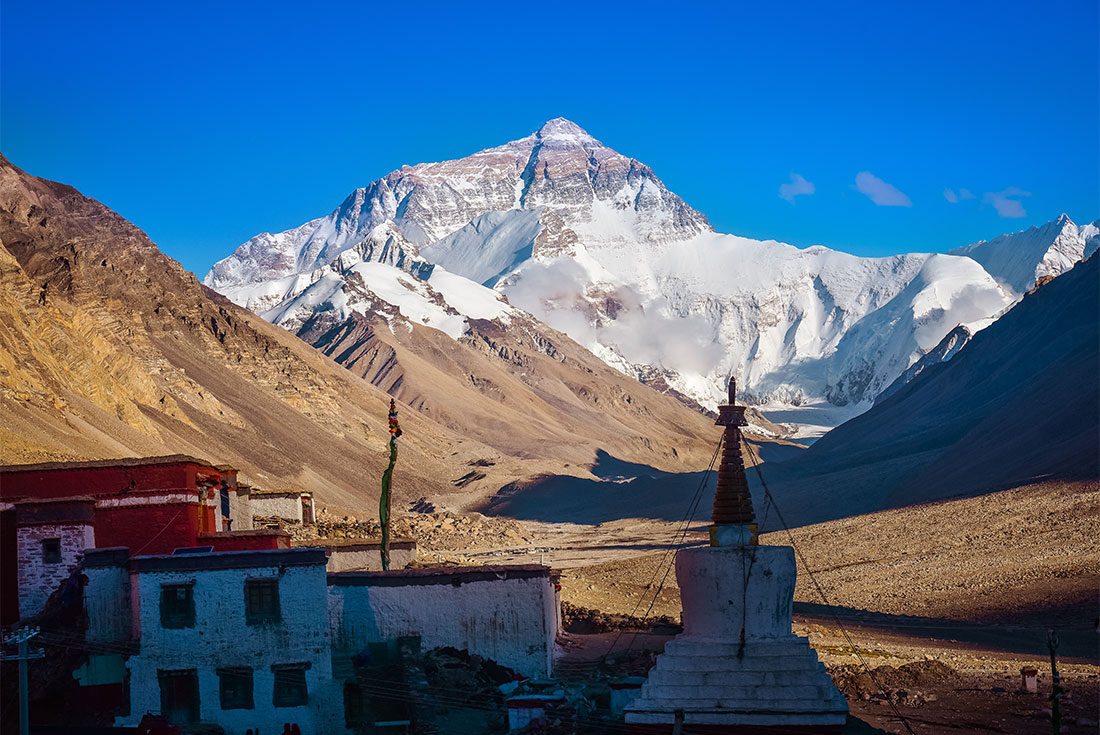
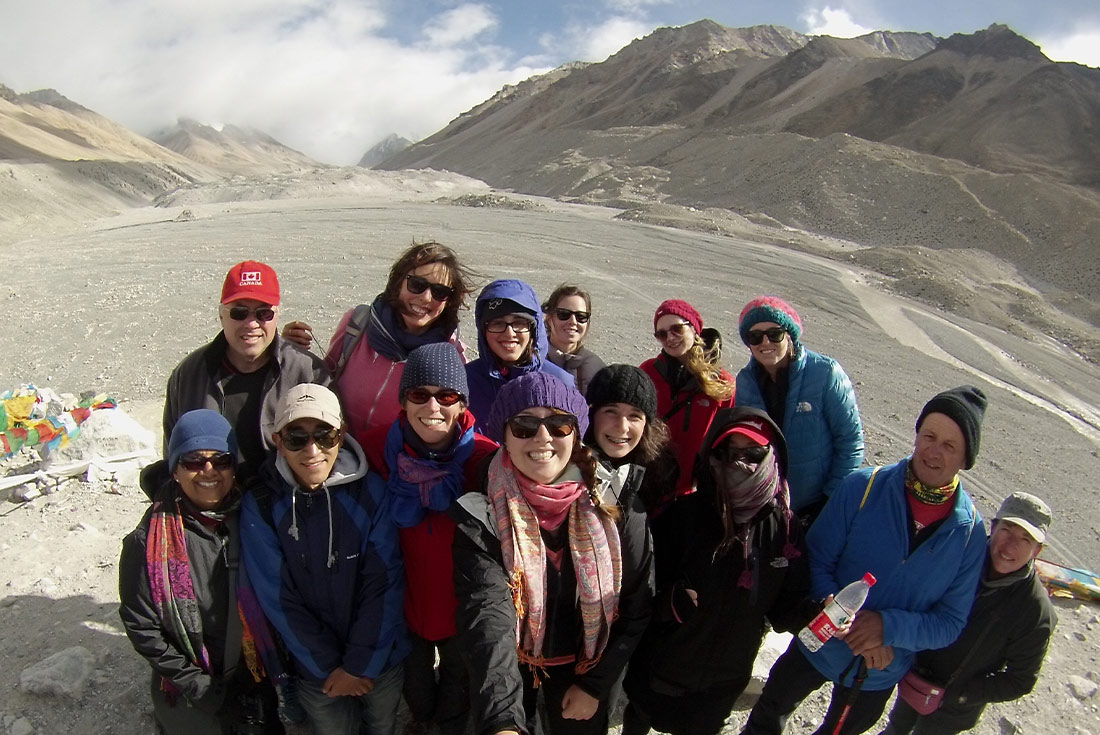
An exhilarating drive brings you to Everest National Park. When you arrive, leave your main luggage in the vehicle and take an overnight bag on the park shuttle to Rongbuk Monastery – the world's highest monastery. On a clear day, you might spot Everest (known as Qomolangma in Tibetan) behind its stupa. Share tea with a resident monk and learn what life is like here before taking part in a short meditation – where better to find stillness than this lofty centre of spirituality, surrounded by timeless mountains? Tonight, you’ll camp in yak hair tents. Relax at the site or take a walk to the Everest Base Camp Monument Stone. This is the closest you can get to Base Camp on the Tibetan side. Witnessing Everest renders many speechless – your leader will explain why it's so sacred for Tibetans. After, maybe opt to hike to the upper monastery, visiting caves where monks meditated centuries ago.
Day 12 - Kyirong
Take one last look at Everest close up before the long drive ahead. You’ll travel to the Tibet–Nepal border today, stopping at the closest town of Kyirong. The effort will be worth it with the changing scenery around you – from the barren highlands of Tibet to the deep Alpine Valley. Put your feet up tonight and enjoy a dinner with your Tibetan leader who will say goodbye to you tomorrow.
Day 13 - Kathmandu
This morning, cross the border from Tibet into Nepal. Keep in mind that today your Tibet group leader and driver will bid you farewell at the border, and you’ll need to pass through immigration and customs unaccompanied. Once you’ve crossed the border, your Nepal group leader will be waiting on the other side! The border crossing can be long and dull depending on the queues and volume of people, so it is best to be patient. After the formalities are all over, head onto Kathmandu, the final destination of your trip. Upon arrival in the late afternoon, follow your Nepal leader on an orientation walk and get to know this bustling capital.
Day 14 - Kathmandu
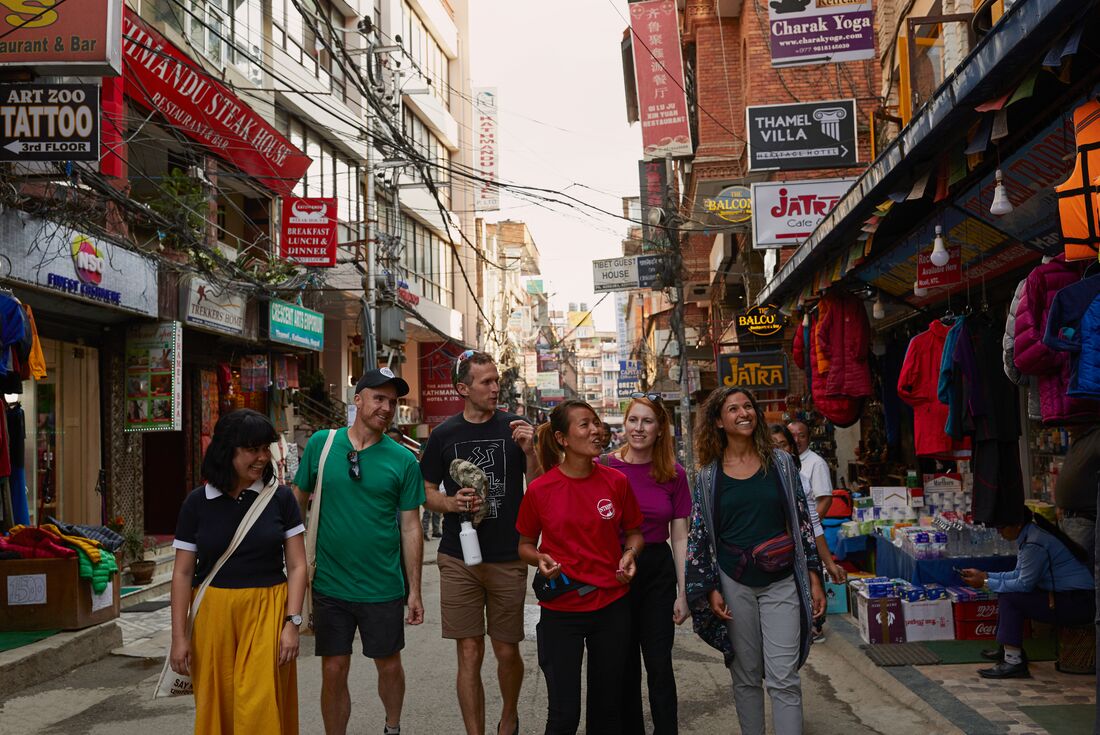
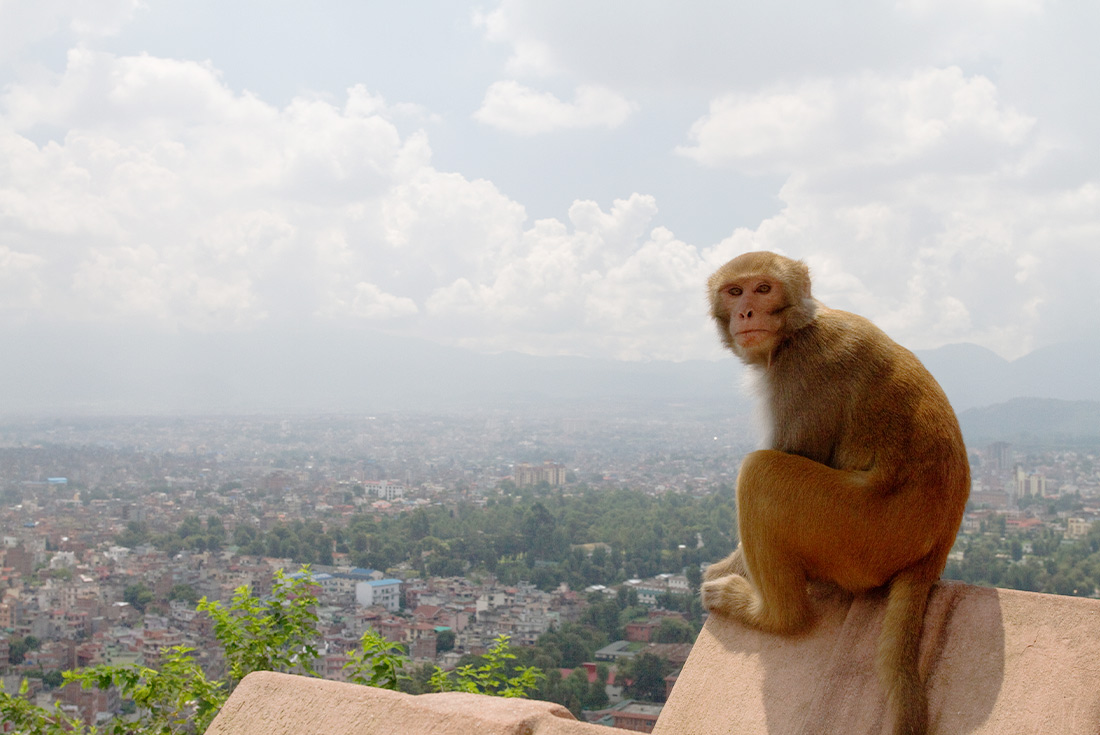
This morning, venture out with your leader and explore the Old Town of Kathmandu. Experience the hustle and bustle of the ancient streets of the Kathmandu Valley, the Asan Tole and Indra Chowk Bazaar. Full of vibrant colours and noises and surrounded by temples, stupas and market stalls, this is the hub of daily Kathmandu life. There’s also a ‘Pote’ bazaar – Pote are beads worn by married Hindu women, typically made by the Muslim families who make up the majority of the market’s vendors. And not too far away is the Seto Machindranath Temple – a place of worship for both Hindus and Buddhists. After, enjoy some free time. You might want to explore Durbar Square or check out the Swayambhunath Stupa. Maybe get together your group in the evening and celebrate this epic trip with some delicious local cuisine.
Day 15 - Kathmandu
With no activities planned for today, you are free to leave the accommodation at any time.

Trip Dates

StartEndPrice FromRoom Type
06-05-202620-05-2026AUD $ 5,032-
13-05-202627-05-2026AUD $ 6,995-
27-05-202610-06-2026AUD $ 5,087-
08-06-202622-06-2026AUD $ 6,860-
03-08-202617-08-2026AUD $ 6,190-
07-09-202621-09-2026AUD $ 7,195-
11-09-202625-09-2026AUD $ 7,460-
14-09-202628-09-2026AUD $ 7,030-
09-10-202623-10-2026AUD $ 7,060-
14-10-202628-10-2026AUD $ 6,560-
19-10-202602-11-2026AUD $ 6,930-
31-03-202714-04-2027AUD $ 6,295-
05-04-202719-04-2027AUD $ 6,295-
12-04-202726-04-2027AUD $ 6,295-
05-05-202719-05-2027AUD $ 6,545-
12-05-202726-05-2027AUD $ 6,545-
26-05-202709-06-2027AUD $ 6,545-
07-06-202721-06-2027AUD $ 6,295-
02-08-202716-08-2027AUD $ 6,545-
23-08-202706-09-2027AUD $ 6,545-
06-09-202720-09-2027AUD $ 6,545-
10-09-202724-09-2027AUD $ 6,800-
13-09-202727-09-2027AUD $ 6,800-
08-10-202722-10-2027AUD $ 6,800-
13-10-202727-10-2027AUD $ 6,800-
20-10-202703-11-2027AUD $ 6,800-
25-10-202708-11-2027AUD $ 6,800-

Accommodation

Hotel (11 nights), Overnight Hard Sleeper Train (2 nights), Permanent Tented Camp/Guesthouse (1 night)

Transport

Overnight Sleeper Train, Private Bus, Public Bus

Map